
How to Manage Cat Medications While You’re Away

A cat who takes medication does not stop needing their familiar routine when you leave town. For many owners, the hardest part of travel is not packing a suitcase. It is wondering whether a pill was given, an injection was handled correctly, or a picky cat actually received the medication rather than leaving it at the bottom of the bowl.
Knowing how to manage cat medications begins with a clear plan that works on an ordinary day, not just in an emergency. When a trusted caregiver can follow that plan in your cat’s own home, you can travel with more confidence while your furry family member stays in the place where they feel safest.
Start with your veterinarian’s exact instructions
Medication routines should always begin with your veterinarian. Before a trip, confirm the medication name, dose, timing, storage requirements, and what to do if a dose is missed. This matters especially for medications that must be refrigerated, given with food, or administered at a precise interval.
Ask your veterinarian to demonstrate the correct technique if your cat needs a pill, liquid medication, insulin, other injections, eye drops, ear medication, or a topical treatment. A written instruction sheet is helpful, but a demonstration can reveal details that are easy to miss, such as the best injection site, whether food should be offered before the medication, or how long a topical medication needs to dry.
Do not make dose changes on your own before traveling unless your veterinarian directs you to do so. Even a well-meaning adjustment to make a schedule more convenient can affect your cat’s treatment.
Create a medication routine someone else can follow
The best medication plan is specific enough that another careful adult can repeat it without guessing. Rather than writing “give pill at dinner,” note the exact time window, the amount of food to offer, how the medication is usually accepted, and whether your cat tends to hide or resist.
For example, you might explain that Luna receives one tablet at 7:00 p.m. tucked into a pill pocket after she has eaten half her wet food. Or that Milo’s ear medication is given after breakfast, with one person gently holding him in a towel while another administers the prescribed amount. These small details reflect your cat’s personality and make the routine less stressful for everyone.
A complete care note should include:
- Each medication’s name, strength, dose, and scheduled time
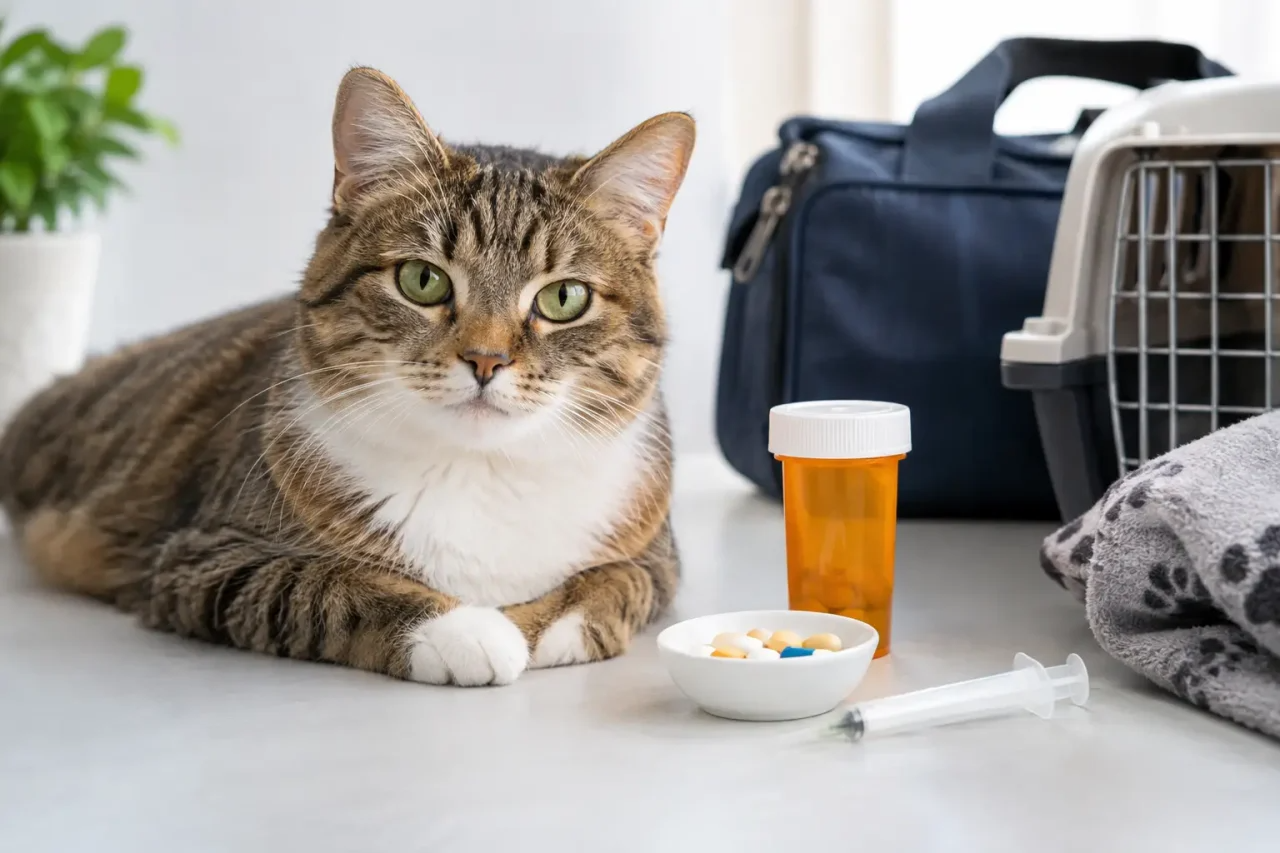
- The method your cat accepts best, such as a treat, food, direct pill, or liquid syringe
- Storage directions and the location of supplies
- Your veterinarian’s name, phone number, and preferred emergency hospital
- Any known side effects or behavior changes that require a call to the veterinarian
- Backup instructions if your cat refuses medication or vomits after a dose
Keep the information in one easy-to-find place, and label each medication clearly. If several people live in the home, a simple medication log prevents accidental double doses.
Practice the handoff before your trip
Cats often behave differently with a new person, even a patient and experienced caregiver. A meet-and-greet before you leave gives your cat time to see that this person is safe in their territory. It also gives the caregiver a chance to watch your usual medication routine and ask practical questions.
This is particularly valuable for cats who are shy, senior, strong-willed, or sensitive to handling. A caregiver may learn that your cat cooperates best on a favorite blanket, after a few minutes of quiet petting, or when the medication is offered before the rest of the household becomes active.
If your cat needs injections, do not assume that written notes are enough. Show the approved technique and supply setup in person. A professional caregiver should only administer medication they are trained and comfortable handling, following your veterinarian’s directions exactly.
Keep medication separate from regular feeding supplies
A cluttered counter is an easy place for mistakes. Store medications together in a designated, secure location away from heat, moisture, curious children, and other pets. Refrigerated medications should be clearly separated from food when possible and kept at the temperature recommended by your veterinarian.
Pre-sorting doses can be useful for simple pill routines, but only if your veterinarian confirms that the medication can be removed from its original container and stored that way. Some medications are sensitive to light, air, or moisture. Others should never be crushed, split, or hidden in a full meal because you cannot be sure your cat consumed the dose.
For multi-cat households, feed and medicate cats separately when needed. It may take a little extra time, but it prevents one cat from eating another cat’s medicated food. It also makes it easier to confirm that the right cat received the right treatment.
Build in enough visit time
Medication visits should not feel rushed. Some cats take a pill in seconds; others need a calm approach, a few minutes to come out from under the bed, or time to settle after treatment. Cats with mobility issues, diabetes, kidney disease, thyroid conditions, or multiple prescriptions may need closer observation during each visit.
This is where in-home cat care can make a meaningful difference. Your cat can stay with their usual litter box, favorite sleeping spots, familiar scents, and normal feeding schedule instead of facing the disruption of boarding. A longer visit may also allow time for medication, feeding, litter care, cleanup, and the gentle attention that helps a cat relax afterward.
Cool Cats Professional Cat Sitting can administer pills, injections, and topical medications during scheduled in-home visits for an additional charge. For owners in Apex, Cary, Holly Springs, Morrisville, Fuquay-Varina, and Raleigh, that support can be especially reassuring when a medical routine cannot pause for a work trip or vacation.
Know what should be reported right away
A reliable caregiver should document each medication attempt and communicate clearly. Daily updates are not just comforting photos. They can confirm that your cat ate, used the litter box, accepted medication, seemed comfortable, and received the attentive care you expected.
Let your caregiver know which changes are normal for your cat and which ones deserve immediate attention. A cat who occasionally skips breakfast may be different from a cat who never refuses food. Likewise, mild hiding after a visitor arrives may be expected, while repeated vomiting, breathing changes, extreme lethargy, trouble urinating, or a sudden refusal of essential medication should prompt a call to the veterinarian.
It depends on the medication and your cat’s diagnosis, but missed doses are not always handled the same way. Never ask a caregiver to double the next dose unless your veterinarian has given that instruction. When in doubt, the safest response is to contact the veterinary team.
Leave room for your cat to be a cat
Medical care is one part of a good visit, not the entire visit. After medication, many cats benefit from quiet reassurance: a favorite wand toy, brushing if they enjoy it, a window perch check-in, or a few unhurried snuggles. These familiar moments help preserve routine and can make future medication times easier.
Your cat does not need a perfect performance while you are away. They need patient, observant care from someone who understands that a hesitant tail flick, a hidden face, or an empty food bowl can tell an important story. A thoughtful plan, clear instructions, and dependable in-home support give your cat the comfort of home and give you the purr-fect peace of mind to be away when life requires it.