
Can Cats Stay Home Alone? A Safe Time Guide

A full food bowl and a freshly scooped litter box can make leaving feel simple. But can cats stay home alone for a weekend or longer without a person checking in? For most cats, the answer is not comfortably. Cats may be independent compared with many pets, but they still depend on us for clean water, safe surroundings, daily observation, and the familiar care that helps them feel secure.
The right plan depends on your cat, your home, and the length of your trip. A healthy, confident adult cat may manage a short absence better than a senior cat, a kitten, or a cat taking medication. Even then, “they have plenty of food” is not the same as knowing they are well.
How Long Can Cats Stay Home Alone?
For a healthy adult cat, being alone during a normal workday is usually fine. Many cats enjoy the quiet and spend much of that time sleeping, watching windows, or moving between favorite resting spots. Overnight can also be manageable for some cats when their routine is stable and the home has been prepared thoughtfully.
Once an absence reaches 24 hours, daily in-home care becomes the safer, kinder choice. Water can spill or become contaminated. An automatic feeder can jam. A cat who seems perfectly healthy before you leave can vomit, stop eating, have a litter-box issue, or become trapped in a closet or behind furniture. These are not reasons to panic. They are reasons to make sure someone is there to notice and respond.
For trips lasting two days or more, plan for at least one professional or trusted caregiver visit each day. Some cats benefit from two visits daily, especially kittens, seniors, cats with medical needs, highly social cats, and households with multiple cats. More frequent visits can also be a better fit for cats who need monitored meals, medication, extra litter-box cleaning, or reassurance after a change in routine.
Why “Independent” Does Not Mean Unattended
Cats are wonderfully self-directed, but they are also experts at hiding discomfort. A cat may not show obvious signs of illness until a problem is more serious. Daily observation gives a caregiver the chance to notice changes in appetite, water intake, energy, breathing, litter-box output, or behavior.
Litter boxes tell an important story, too. A missed urine clump, diarrhea, constipation, or repeated accidents may point to a health concern that needs prompt attention. Male cats, in particular, can develop urinary blockages that require emergency veterinary care. No owner wants to return from a trip wishing someone had recognized a change sooner.
Emotional well-being matters as much as the practical basics. Some cats are happy with a brief check-in, food, and a little play. Others become lonely, bored, or anxious when their people are gone. They may hide, over-groom, vocalize, stop eating normally, or scratch and chew things they usually ignore. Familiar, calm attention in their own home can make a meaningful difference.
What Changes the Answer for Your Cat?
Age, health, personality, and household dynamics all shape how much care a cat needs while you are away. A young kitten should not be left for long stretches. Kittens are curious, fast, and still learning what is safe. They need frequent meals, supervision, play, and help staying out of trouble.
Senior cats may need closer monitoring even if they have always been easygoing. Arthritis can make getting into a high-sided litter box difficult. Kidney disease, diabetes, thyroid conditions, and dental pain can affect eating, drinking, and bathroom habits. Cats receiving pills, injections, or topical medication need a reliable plan that does not depend on guesswork.
Your cat’s temperament matters, too. A shy cat may not want a long play session with a new person, but they still need a quiet caregiver who refreshes resources, checks their hiding places, and watches for signs that something is off. A friendly, people-focused cat may need more interaction and snuggle time to feel settled.
Multi-cat homes deserve special attention. More cats do not always make a trip easier. Cats can compete over food, water, preferred litter boxes, or sleeping spaces when the household routine shifts. A daily visit helps confirm everyone is eating, using the litter box, and getting along as expected.
Prepare the Home, Then Arrange Daily Care
A good pre-trip setup supports your cat, but it should never replace in-person care. Before leaving, secure medications, string, hair ties, toxic plants, cleaning products, and tempting foods. Check that windows, screens, doors, and balconies are secure. Keep your cat’s routine as normal as possible, including feeding times and the locations of bowls and litter boxes.
Leave clear instructions for the person caring for your furry family member. The best notes are specific: how much food to serve, where your cat likes to hide, which toys they enjoy, what normal litter-box habits look like, and which behaviors are unusual. Include veterinary contact information, an emergency contact, carrier location, and permission for emergency care if you cannot be reached quickly.
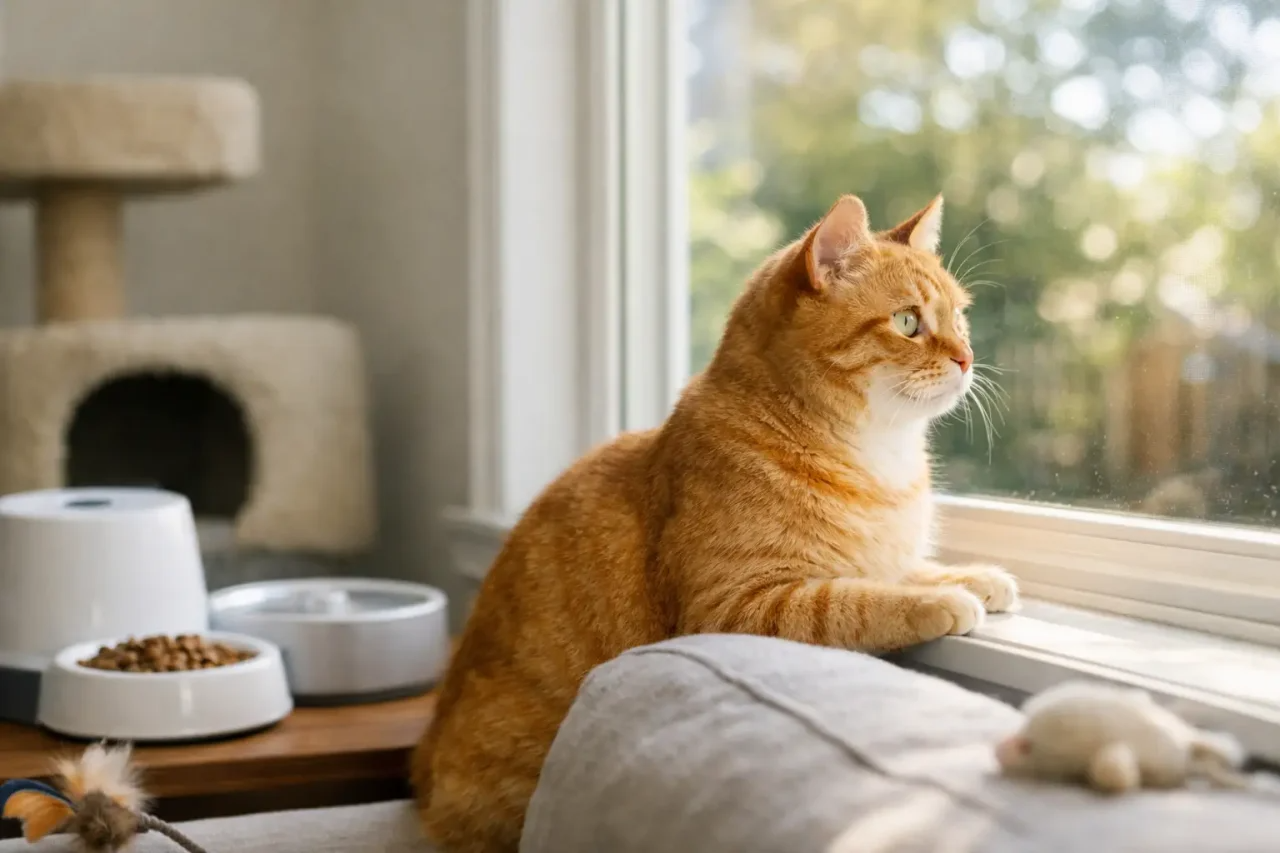
For a trip of several days, provide more than one water source and enough clean litter boxes for the household. Automatic feeders and fountains can be helpful backups, but they are not substitutes for a person who can confirm they are actually working. Technology is useful. Human observation is what catches the unexpected.
A simple departure checklist can reduce last-minute worry:
- Refresh food and water stations, while leaving extra supplies in an easy-to-find place.
- Scoop and inspect litter boxes before you go, then leave litter and cleaning supplies available.
- Put your cat’s carrier somewhere accessible rather than buried in a closet.
- Share written care instructions, veterinary details, and your travel itinerary.
- Arrange daily updates so you know your cat has been seen and cared for.
When a Professional Cat Sitter Makes Sense
Asking a neighbor or friend can work when they are dependable, comfortable with cats, and able to visit consistently. Still, a professional cat sitter offers a different level of preparation. Cat-focused care means understanding that a hiding cat may be normal on day one, but a change in eating or litter-box habits deserves closer attention.
Professional visits also preserve the routine cats know best: home. There is no car ride, unfamiliar kennel, exposure to other animals, or disruption from a new environment. Instead, your cat receives care where their scent, bed, toys, and favorite sunspots are already waiting.
At Cool Cats Professional Cat Sitting, visits can be tailored to the cat in front of us, not a generic checklist. A 30-minute visit may be ideal for a confident adult cat who needs meals, litter maintenance, and a friendly check-in. A 45- or 60-minute visit can allow more time for play, brushing, shy-cat patience, multiple feeding routines, or extra affection. Medication support, including pills, injections, and topical treatments, can also provide reassurance for cats with ongoing health needs.
Daily photo updates are more than a nice extra when you are away. Seeing your cat eating, relaxing, or batting at a favorite toy can quiet the worry that tends to show up halfway through a work trip or family vacation. It also gives you a clear record that your cat has been checked on and is receiving the personal attention they deserve.
Give Your Cat the Care Their Absence Requires
There is no single number of hours that fits every cat. A relaxed adult cat may be fine alone for a workday, while a kitten, senior, medicated cat, or anxious cat needs much more support. The most caring approach is to plan around your individual cat’s needs, not the minimum they might tolerate.
Before you pack, picture your cat’s ordinary day: the breakfast routine, the clean litter box, the play invitation, the quiet check-in that tells you everything is okay. Arranging dependable in-home care keeps those small comforts in place and lets you travel with the purr-fect peace of mind that someone attentive is watching over them.