
How to Choose a Cat Sitter for Senior Cats

Your senior cat may still greet you at the door, still claims the sunniest spot on the rug, and still lets you know when dinner is running late. But age has a way of making even small disruptions feel bigger to an older cat. So when you’re heading out of town, choosing a cat sitter for senior cats in Cary means looking for more than someone who can fill a bowl and scoop a litter box. Your cat needs someone calm and observant — someone who can follow their routine, notice what’s normal for them, and give you real peace of mind while you’re away.
For most older cats, staying home is the kindest option. Their favorite napping spot, their food bowl, the litter box in its usual corner, the familiar creaks of the house — all of it offers a kind of reassurance a boarding facility just can’t. Good in-home cat sitting protects that sense of security while making sure nothing gets missed along the way.
Why Senior Cats Need a Little Extra Attention
Cats are notoriously good at hiding when something’s wrong. A senior cat won’t tell you they’re eating less, drinking more, moving stiffly, or spending a little too much time under the bed. Those are the kinds of details that get missed during a rushed, in-and-out visit — especially by someone who doesn’t know cats particularly well. Senior cats often require more attention than younger cats due to age-related health conditions, medication needs, and changes in mobility. A professional cat sitter experienced with senior cats can provide personalized in-home care that reduces stress and helps maintain your cat’s normal routine while you’re away.
A good sitter understands that caring for an older cat is about more than food and litter. They’re paying attention to appetite, water intake, litter box output, mobility, and mood — and noticing anything that’s different from your cat’s usual habits. Skipping one meal isn’t always cause for alarm, but it’s worth watching closely, especially for a cat living with kidney disease, diabetes, hyperthyroidism, arthritis, or another ongoing condition.
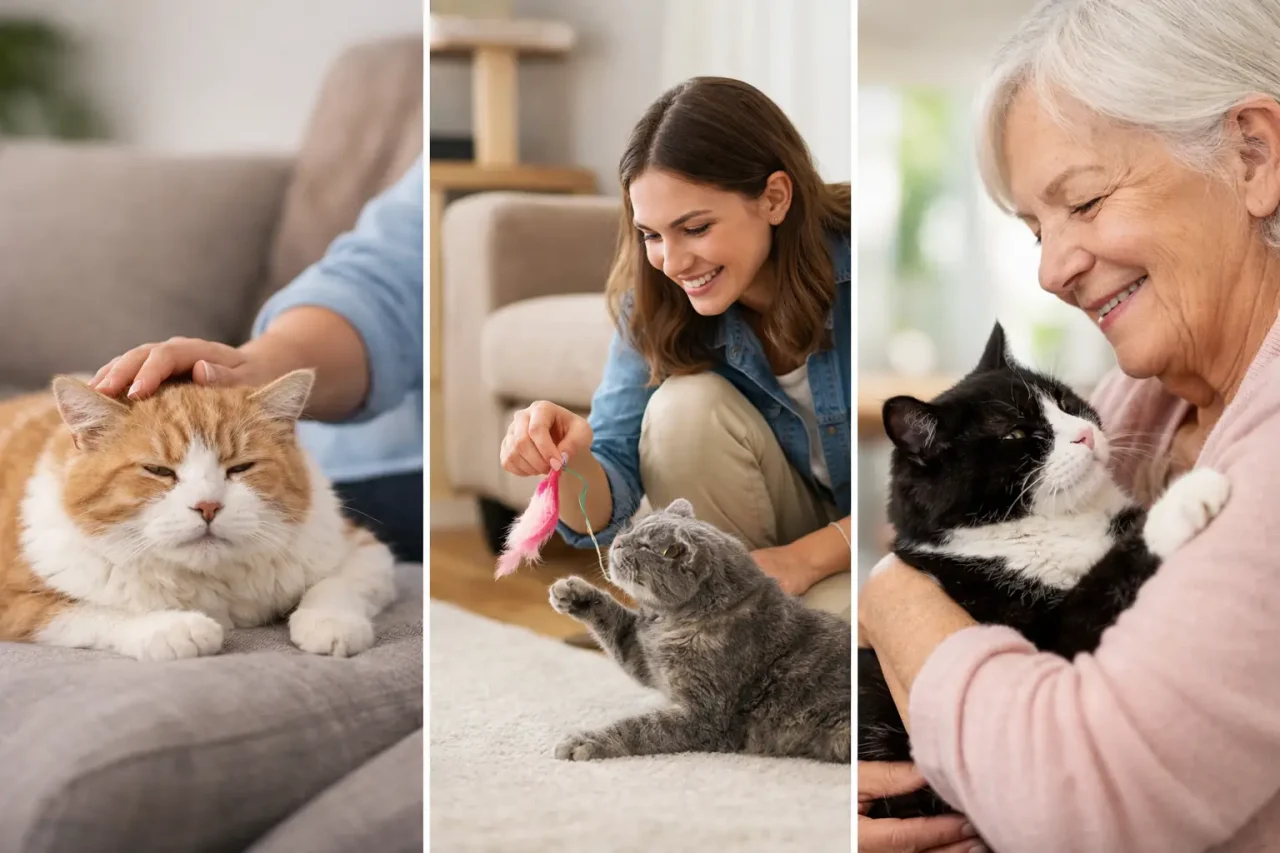
Older cats also tend to have very particular preferences. One might want slow, gentle brushing and a few quiet minutes curled up nearby. Another might still enjoy a lazy wand-toy session but need a boost onto their favorite chair. The right sitter meets each cat where they are, instead of expecting every cat to be social, playful, or easy to medicate.
What to look for in a Cat Sitter for Senior Cats
The best choice isn’t always whoever’s closest or cheapest. Look for a service built around consistency, close observation, and honest communication — not just a quick drop-in.
Experience with cats specifically matters.
A cat-only sitter understands feline body language and knows that a cat hiding under the bed isn’t necessarily an unfriendly one. They move slowly, keep things low-key, and let trust build at your cat’s own pace. They’re also more likely to catch the subtle stuff — a normally talkative cat gone quiet, or a litter box that suddenly looks different than it should.
Ask how a prospective sitter handles shy cats, cats with mobility issues, or cats set in their ways. You want an answer that sounds patient and thoughtful, not like a script. Your cat deserves someone who sees their personality, not just a chore list.

cat sitter for senior cats
Your Cat Sitter for Senior Cats should include Real Observations, not just tasks that were preformed.
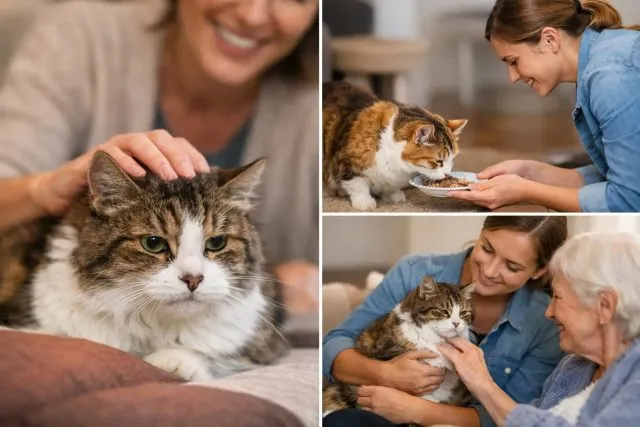
Feeding on schedule, refreshing water, scooping the litter box, cleaning up any accidents or hairballs, and spending genuine time with your cat all matter. But for a senior cat, the sitter should also checking whether food and water levels look normal and whether the litter box is telling a different story than usual.
Longer visits tend to be worth it for older cats — especially ones who need medication, have several care tasks, or simply do better with unhurried company. A 30-minute visit might suit an independent, healthy senior just fine. A 45- or 60-minute visit gives more breathing room when meals need care, medication is involved, or your cat just wants some slow petting and quiet reassurance.
Your Cat Sitter for Senior Cats should be Experienced with Medication and have a clear plan, not an assumption.
If your cat takes pills, injections, or topical medication, don’t assume every sitter is comfortable handling it. Ask directly about experience, their process, and whether there’s an extra charge. Giving medication takes patience, skill and a steady hand, especially once a cat has caught on to the old pill-pocket trick.
Before you leave, write out clear instructions: medication name, dose, timing, method, storage, and what to do if your cat refuses it. Your sitter should have your veterinarian’s contact information, your emergency contact, and a clear sense of which signs mean it’s time to call.

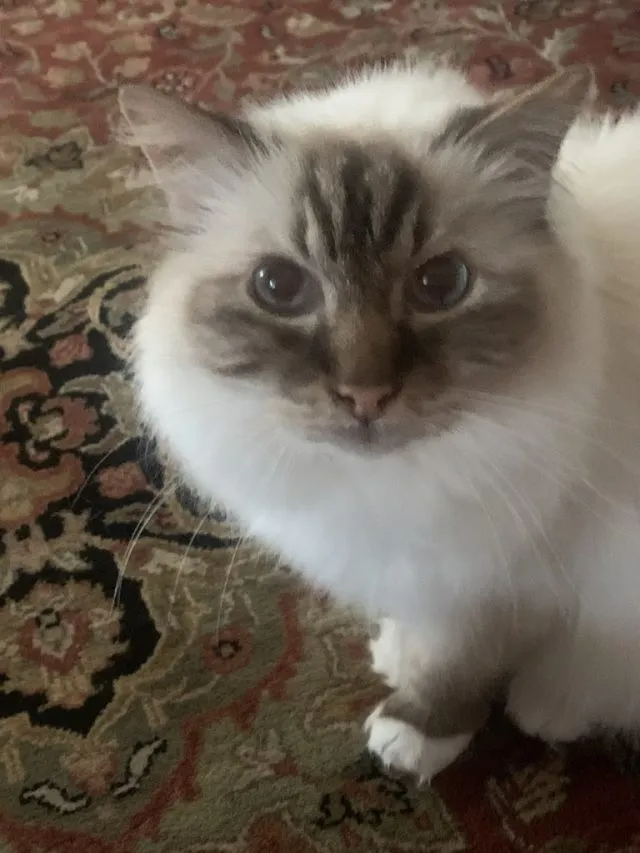
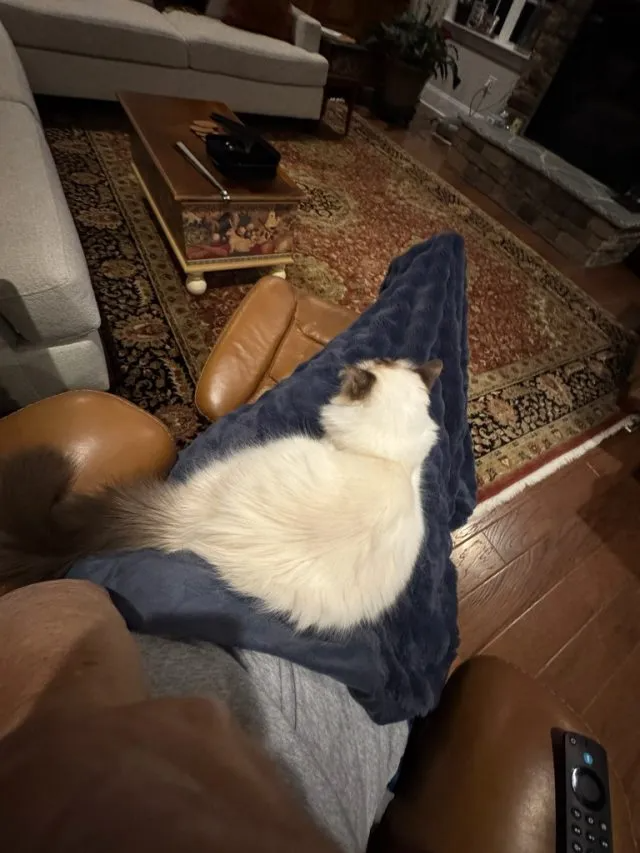
White Birman Senior Cat with Lynx Point Markings
Cat Sitters for Senior Cat should send Updates that tell you something real.
A cute photo is nice, but for a senior cat, you want more than proof someone showed up. Look for reports that tell you whether your cat ate, drank, used the litter box, took their medication, and generally seemed like themselves. A brief short note about mood and behavior can ease a lot of travel related worry.
At Cool Cats Professional Cat Sitting, we send visit updates by text, email, or app, so you’re never left guessing how the visit went. That kind of consistent communication matters even more when when your furry family member has age-related health needs.
Getting your home Ready for your Cat Sitter for Senior Cat Care
Even the most experienced sitter can provide better care with specific instructions. Your meet-and-greet is the time to walk through your cat’s normal day and point out the little details that make them feel safe.
A simple care plan cover:
- Feeding times, portions, treats, and anything your cat shouldn’t have.
- Medication instructions, supplies, veterinary contacts, and how you’d like urgent decisions handled.
- Litter box location, normal bathroom habits, and where backup live.
- Favorite hiding spots, mobility concerns, comfort routines, and anything that is known to cause stress for your cat.
If your cat has arthritis or limited vision, keep their path through the house easy and predictable. Keep food, water, and litter boxes within easy reach. Avoid rearranging furniture right before a trip. If they use pet stairs, ramps, a heated bed, or a special low-entry litter box, make sure the sitter knows how why those things matter to your cat’s comfort.
It’s also worth packing extra supplies — enough for your whole trip, plus a few days’ cushion. Flights get delayed and plans shift, and knowing your cat has what they need takes one more thing off your mind.
Choosing the right visit schedule
There’s no universal schedule that works for every senior cat. It depends on your cat’s health, medication needs, temperament, and household. A cat managing diabetes, daily medication, a smaller appetite, or a recent health change may do best with more frequent or longer visits. A healthy, independent older cat might be perfectly content with one solid visit a day, though plenty of owners prefer two for extra peace of mind and company.
Think about what your cat needs between visits. Do they eat on a strict schedule? Do they drink from a fountain that needs monitoring? Are they prone to vomiting, constipation, or litter box accidents? The answers help point you toward a 30-, 45-, or 60-minute visit.
A sitter worth hiring won’t push a one-size-fits-all package on you. They’ll ask questions, actually listen to your concerns, and help you land on a schedule built around your cat — not just your travel dates.

White Birman Senior Cat with Lynx Point markings
Questions worth asking your cat sitter for senior cats before you book
At your meet-and-greet, ask how the sitter documents meals, medication, and litter box habits. Ask what they do if they notice something concerning, and how they’ll reach you while you’re traveling. It’s completely fair to ask whether the business is insured and whether they’ve worked with your cat’s specific condition before.
Pay attention to how they interact with around your cat. A sitter who sits quietly on the floor, keeps their voice low, and lets a cautious cat approach on their own terms is usually showing exactly the kind of patience a senior cat needs. That instinct matters, but it should be backed up by the practical stuff too — clear scheduling, upfront pricing, written instructions, reliable updates, and a real emergency plan.
For cat families in Cary, Apex, Holly Springs, Fuquay-Varina, Raleigh, and Morrisville, professional in-home care means your senior cat never has to leave the house they know. There’s no carrier, no car ride, no unfamiliar boarding kennel — just their own space, their own routine, and someone dependable checking in. Visits start at $28, with longer visits and medication support available for cats who need more hands-on attention.
Your senior cat has spent years learning the rhythms of your home and the people they love. A trip away doesn’t have to mean disrupting the comfort they depend on. With the right sitter and a detailed care plan, you can travel knowing your senior cat is enjoying the company of his Cool Cats sitter. If you’re looking for a professional cat sitter for a senior cat in Apex, Cary, or Western Wake County, Cool Cats Cat Sitting provides personalized in-home care tailored to older cats. We understand the unique needs of senior felines and can provide medication, monitor changes in behavior, and keep your cat comfortable in the familiar surroundings of home.