

How to Give Your Cat Medication at Home with Less Stress

Cheui Rulona • September 25, 2026

Giving medication to a cat isn’t always easy. If you’re wondering how to give a cat medication at home with less stress, the right preparation, technique, and routine can make medication time safer and less stressful for both you and your cat. A pill hidden in breakfast can feel like an easy win — until your cat finds it, eats around it, and gives you a look that says, “Nice try.” If you’ve ever stood in your kitchen at 7am negotiating with a cat who has clearly won, you know exactly what we mean. For a lot of cat families, giving your cat medication at home is one of the most stressful parts of caring for a senior cat, a newly diagnosed cat, or one who’s recovering from illness. The goal isn’t a perfect routine overnight. It’s giving medication safely, keeping your cat’s trust intact, and knowing when it’s time to call in backup. Cats notice everything. A new smell, a shifted feeding schedule, a hand that’s just a little too tense — any of it can turn even the mellowest cat suspicious. But with a bit of preparation and a calm approach, most often giving your cat medication at home can become just another part of the daily routine, instead of a daily standoff.


Start With Clear Instructions From Your Veterinarian


Before you give anything, confirm the details with your vet team. What’s it for? What’s the exact dose? How often, and does it need to go with food? What should you actually do if your cat spits it out or you miss a dose? (Hint: don’t just assume you should double up next time — that can be unsafe.) While you’re at it, ask whether the medication can be compounded into a flavored liquid, a smaller capsule, a chew, or something else entirely. Cats are surprisingly particular about format. One cat might fight a large tablet tooth and nail but happily lap up a flavored liquid, while another finds the taste of liquid medicine offensive and does much better with a quick capsule followed immediately by a favorite treat. And please — be careful with medications that shouldn’t be crushed, split, mixed into food, or handled without gloves. Your vet or pharmacist will tell you if any of that applies. Human medications and leftover pet meds should never be given unless your vet has specifically prescribed them for your cat.

cat litter box cleaning service

Set Yourself Up for Success at Home


Preparation really is half the battle when giving your cat medication at home. Before you even bring your cat over, gather the medication, a towel (if gentle wrapping helps), a small treat or chaser, and a written medication log. Digging through drawers for supplies while your cat waits is a great way to turn a calm moment into a tense one. Pick a quiet, familiar spot with decent lighting. Some cats do best on a counter with a non-slip towel underneath them. Others feel safer on the floor, a bed, or your lap. There’s no universally “correct” spot — just the one where your cat is least likely to bolt and you can handle them safely without rushing. Keep your voice low and your movements matter-of-fact. Cats read our body language far more than our words, and if you walk in bracing for a fight, your cat will probably sense it before you’ve even opened the pill bottle. A brief pet, a calm pause, and a predictable routine usually do more good than a lot of coaxing. Go to Fundamentally Feline for additional tips and tricks on setting yourself up for success!


Keep a Simple Cat Medication Log


A cat medication log isn’t just for complicated treatment plans — it’s genuinely useful anytime your cat needs medication administered at home. Especially if more than one person is involved in your cat’s care or when doses happen at odd times of day. Jot down the date, time, medication, dose, whether it actually went down successfully, and anything unusual — vomiting, drooling, hiding, skipped meals. It’s a small habit, but it prevents accidental double-dosing and gives your vet real information if something changes. It’s also essential if a professional sitter is stepping in to follow your care plan while you’re away.


How to Give a Cat Medication at Home With Less Stress


Medication needs to be effective — but it doesn’t have to turn every dose into a dramatic event. If your vet gives the green light, hiding a pill in a small amount of a high-value food is often a good first move. Just use a small enough amount that you’re confident your cat will finish the whole thing. A full bowl is risky, because you honestly won’t know if the dose made it in. Some cats catch on to pill pockets or treats after a few rounds and start turning up their nose. If that happens, try offering a plain treat first, then the medicated one, then another plain treat — the “sandwich” trick can make the middle one feel less suspicious. That said, don’t keep hiding medication in your cat’s regular meals if it starts making them wary of a food they used to love.?

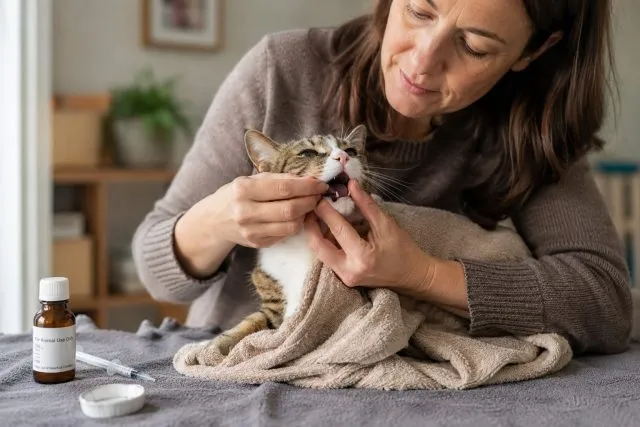
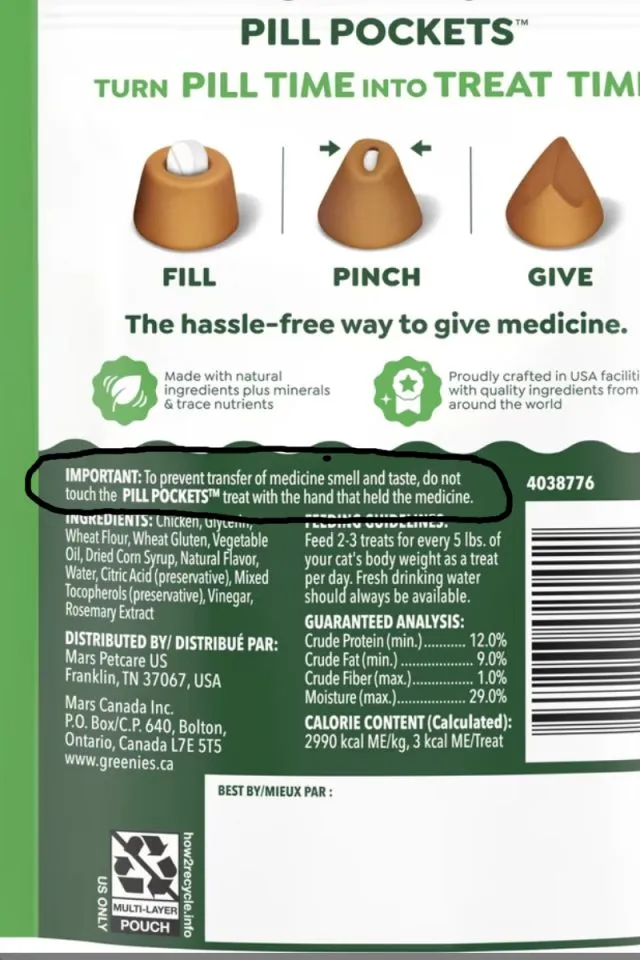
One not so secret direction about using pill pockets are that you should not touch the pill pocket with a hand that has touched the medication to prevent the transfer of the smell of the medication on to the pocket. For direct pill-giving, calm and efficient handling is everything. Set your cat on a stable surface, support their body, and avoid squeezing the chest or holding them in a way that restricts their breathing. A snug (never tight) towel wrap can help some cats feel more contained and less likely to scratch. And if your cat becomes seriously distressed, it’s okay to stop — call your vet team for coaching or ask about a different medication form.


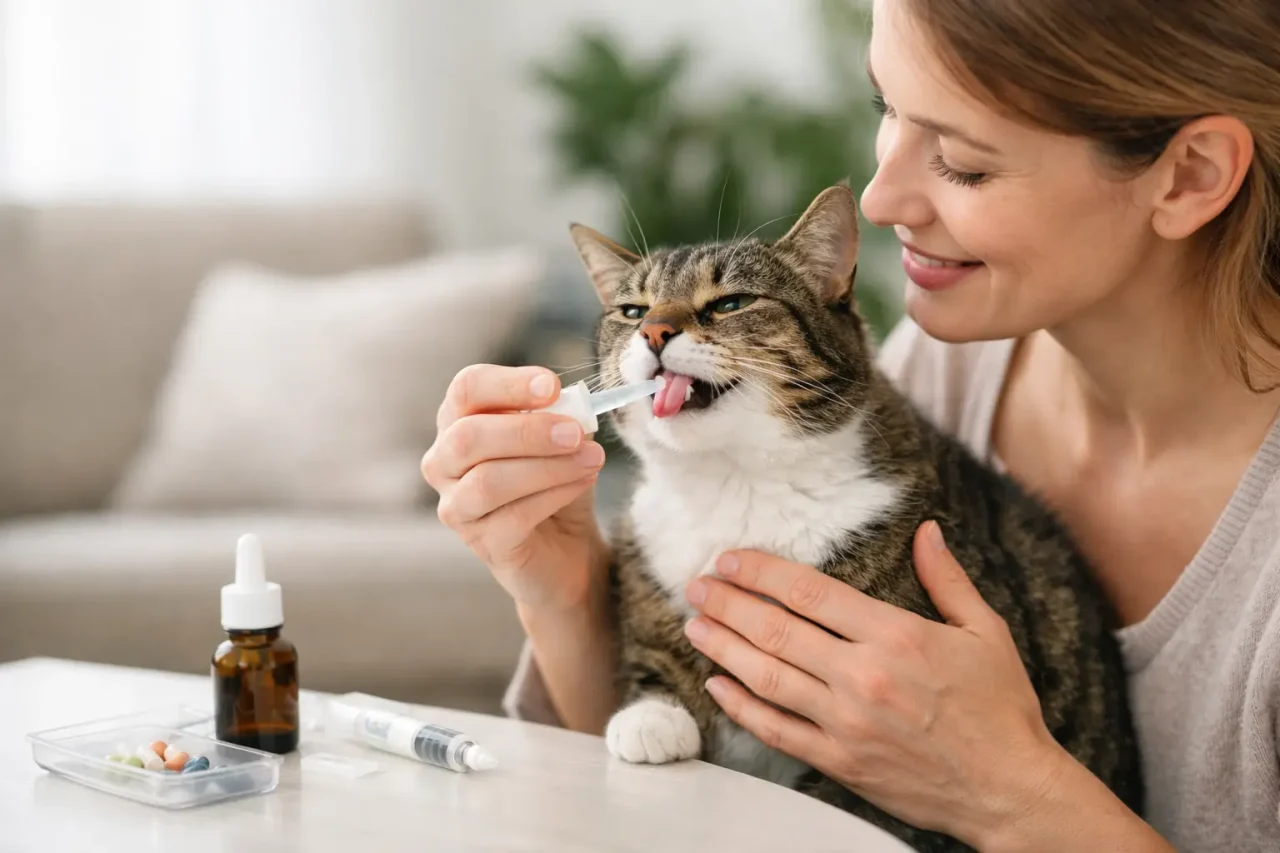
Liquid medication comes with its own quirks, since some cats foam or drool when they don’t like the taste. It looks alarming, but it doesn’t necessarily mean the dose didn’t go down — your vet can tell you what’s normal for that particular medicine. If you’re using an oral syringe, aim for the side of the mouth behind the canine tooth, angle toward the cheek rather than straight down the throat, and go slowly in small amounts so your cat has time to actually swallow. Then follow up with a favored treat or squeeze treat.


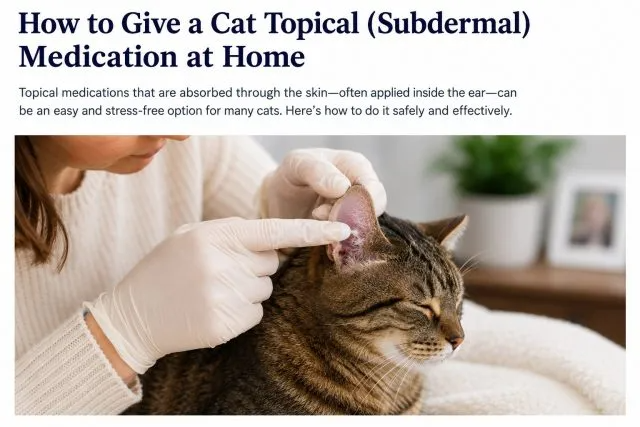
Topical cat medication at home needs to go exactly where directed — usually somewhere your cat can’t easily lick it off. Wash your hands afterward or use plastic gloves or possibly just the tip of one glove on one finger, and keep other pets away if the label says to. With trans-dermal medications, consistency matters: alternate ears or application sites if instructed, and wear gloves when recommended. Apply the medication to the inside of the Pinna above the little flap inside the base of the ear called Henry’s Pocket. Massage it in for maximum absorbency.

applying topical sub dermal medication to the inside of the pinna

Injections Take Training, Not Guesswork


Some cats need insulin, fluids, or other injectable medications at home, and yes, that sounds intimidating at first — especially when you’re worried about hurting them. The good news is most owners feel a lot more confident after hands-on training from their vet or vet tech. Ask them to walk you through exactly where and how to inject, how to store the medication, how to handle needles safely, and what symptoms should prompt a call. Don’t improvise on injection sites, needle sizes, or dosing — ever. For diabetic cats especially, work with your vet team to establish a reliable feeding and insulin schedule, since appetite swings can affect how safe a given dose is. A calm cat often does best with injections during a familiar routine — right before a meal, say, or during a gentle petting session. If your cat’s a treat lover, reward them afterward. It won’t erase every objection, but it helps keep cat medication at home from being the only thing your cat associates with you.


Know When to Pause and Call the Vet


Call your vet right away if your cat has trouble breathing, facial swelling, collapse, repeated vomiting, severe lethargy, seizures, or a sudden, dramatic behavior change after medication. Those can be signs of a real reaction, not just a bad mood. You should also call if you genuinely can’t get the medicine into your cat, if every single dose turns into a struggle, or if your cat starts hiding, skipping meals, or getting aggressive around medication time. Sometimes the fix is a different formulation, sometimes it’s a demonstration appointment, sometimes it’s a revised treatment plan altogether — any of which can protect both your cat’s health and your relationship with them. A little temporary drooling after a bitter liquid is often expected. Ongoing vomiting, refusal to eat, or behavior that just feels off deserves a call to your vet. Trust your gut here — you know your cat’s normal behavior better than anyone else possibly could.


Make Travel Plans Part of the Care Plan


When you travel, giving your cat medication deserves some extra time set up with your cat sitter to go over your cats routine and how they best receive their medication. Leave medications in their original containers, write out clear instructions, share your vet’s contact info, and explain how your cat typically responds to each dose. Include where supplies are kept, the handling method that works best, approved treats, and what to do about a missed or refused dose. If you’re in Apex, Cary, Holly Springs, Fuquay-Varina, Raleigh, or Morrisville, Cool Cats Professional Cat Sitting offers cat-focused home visits and cat medication administration at home support — we do pills, injections, topical, all of it. A meet-and-greet gives you time to walk through your cat’s routine, show us the process firsthand, and figure out the visit length that actually fits their comfort and health needs. Daily updates can be a real source of relief while you’re away. This is especially the case for cats with ongoing medical needs. Knowing that someone has laid eyes on your cat, topped off their water, tended the litter box, given the medication exactly as instructed, and checked in on their mood — that’s the kind of peace of mind that makes leaving town a little easier. Your cat doesn’t need to love medication time for it to work. A steady routine, careful notes, gentle hands, and the right support can turn a daily challenge into just one more small, dependable act of love.

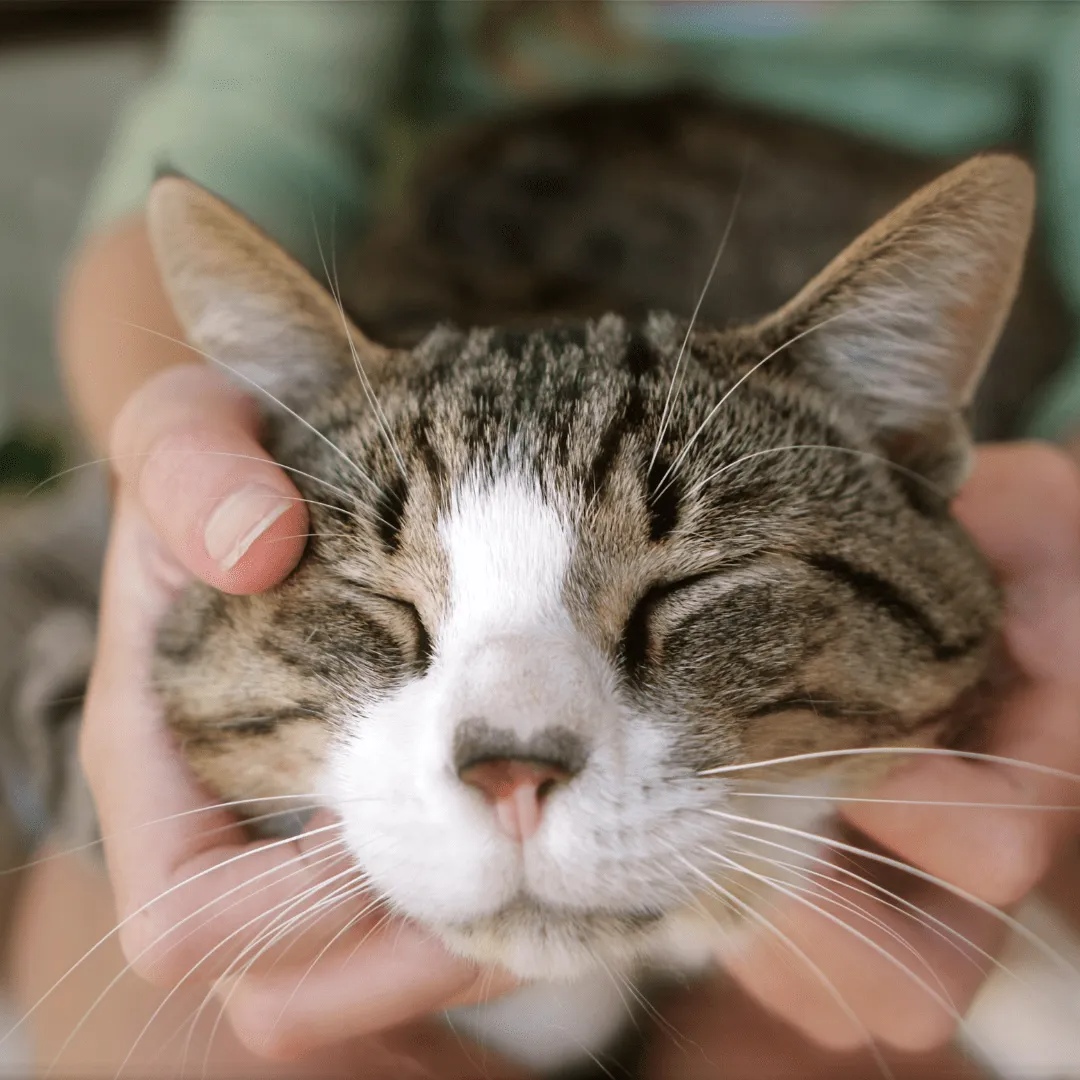
Tabby cat with closed eyes being gently held by hands, close-up portrait
September 29, 2026
Talking About How To Make Cats Happy And The Month-Long Holiday That Promotes Cat Happiness The month of September is celebrated by cat lovers everywhere as Happy Cat Month! Never heard of Happy Cat Month? Then you’re in luck because Cool Cats Professional Cat Sitting has you covered! This article will cover everything you need to know about Happy Cats Month, how to celebrate it, and some of the best ways to keep your cat happy. What Is Happy Cat Month? So what is Happy Cat Month? Happy Cat Month is a month-long holiday that aims to inform and educate cat owners about how to make their cats healthy and happy. It’s a common misconception that cats are self-sufficient pets. While most cats do have an independent nature, they are still very social creatures. Cats need lots of love & attention just like any other pet. Happy Cat Month is a friendly and celebratory way to educate people about the welfare, health, and importance of our feline friends.
A wildcat behind a wire fence, looking through the bars with one paw raised.
September 29, 2026
Covering Two Very Important Pet-Themed Holidays That Focus On Shelter Animals And The Struggles They Face The month of September contains several pet-themed awareness based holidays. Two of the most significant of these holidays are Adopt A Less Adoptable Pet Week and Remember Me Thursday. Both of these holidays are centered around shelter animals and the struggles they face. This article will discuss both of these holidays and offer various ways you can observe them. Adopt A Less Adoptable Pet Week The 3rd week of September is widely celebrated by pet lovers everywhere as Adopt A Less Adoptable Pet Week. This year (2023) Adopt A Less Adoptable Pet Week takes place from September 18th to September 24th. This week-long holiday was founded by PetFinder , an online searchable database of animals that need homes. Additionally, PetFinder also has a directory of nearly 11,000 animal shelters and adoption organizations. These animal shelters and adoption organizations span across the U.S., Canada, and Mexico. Adopt A Less Adoptable Pet Week was founded to raise public awareness about shelter animals that are often overlooked. Most of these animals are overlooked based solely on appearance. However, just because an animal doesn’t look perfect, doesn’t mean they are not worthy of adoption. Additionally, this also applies to senior pets or pets with special needs. Many people believe it would require too much effort to care for a senior pet or special needs pet. Caring for these types of pets may not be easy, but it is still very rewarding and humbling to do so. Remember Me Thursday Remember Me Thursday occurs every year on the last Thursday of September. This year (2023) it will take place on September 28th. This pet themed awareness based holiday was founded in 2013 by Helen Woodward Animal Center of San Diego . The focus of Remember Me Thursday is to raise awareness about the importance of pet adoption and all of the shelter animals that are in need of a forever home. Remember Me Thursday has made a huge impact in the world since its founding in 2013. More than 190 countries have supported Remember Me Thursday along with over 700 different animal welfare organizations worldwide. Additionally, more than 330 million people have helped spread awareness about Remember Me Thursday across various social media platforms. What started as a pet-themed holiday has now become a worldwide movement to inspire change in shelter animals’ lives.