
How to Preserve Your Cat’s Routine for Travel

Your suitcase is packed, but your cat is watching from the hallway with the same question every pet parent feels: What will happen to my routine when you leave? For cats, familiar timing and familiar surroundings are more than preferences. They are a source of comfort. This cat routine preservation guide explains how to keep your furry family member feeling secure while you are away, without asking them to adjust to a kennel, unfamiliar animals, or a completely different daily rhythm.
Why Cats Feel Change So Deeply
Cats often look independent because they enjoy their own space, but most are closely tuned in to the patterns of home. Breakfast arrives at a certain hour. The litter box is cleaned in a particular way. Their favorite person sits in a familiar chair each evening. Even the sounds and scents of home tell a cat that all is well.
Travel interrupts those signals. Some cats become quieter and spend more time hiding. Others become extra vocal, eat less, or show their stress through litter-box changes. A senior cat, a cat with a medical condition, or a shy cat may need even more thoughtful support. This does not mean you cannot travel. It means the care plan should fit the cat rather than expecting the cat to adapt to a new environment.
In-home cat sitting helps protect what is already working. Your cat remains in the place where they know the hiding spots, sunny windows, litter box locations, and daily household sounds. A professional sitter can step into your routine with clear instructions and a gentle, cat-focused approach.
Cat Routine Preservation Guide: Start Before You Leave
The best care instructions are specific enough that another caring person can follow them without guessing. “Feed twice a day” is a helpful start, but details make all the difference. Note the usual feeding times, exact food type and portion, where bowls belong, and whether your cat prefers company while eating or space to finish a meal.
Write down water preferences, too. Some cats drink better from a fountain, a wide ceramic bowl, or a glass placed away from food. If your cat has a favorite treat, a sensitive stomach, or a habit of trying to steal food from another cat, include that information in the plan.
Litter-box care deserves the same attention. Tell your sitter where each box is located, what litter you use, how often you normally scoop, and where waste should go. For multi-cat homes, it helps to explain which cat uses which box if you have noticed patterns. Small changes in stool, urine clumps, or litter-box behavior can offer important clues about a cat’s health, especially when a cat is older or has a history of urinary concerns.
Keep the Schedule Familiar, Not Just the Chores
Routine preservation is not simply completing a checklist. Timing and interaction matter. A cat who expects breakfast and a short wand-toy session each morning may be less settled if both happen late at night instead. Whenever possible, schedule visits around the rhythm your cat already knows.
Choose a visit length that allows for more than food and litter. A 30-minute visit can be a great fit for an easygoing cat who needs dependable essentials and a little attention. A 45- or 60-minute visit may be a better choice for a social cat, a multi-cat family, a kitten with energy to spare, or a cat who needs medication and unhurried observation.
More time is not always necessary for every cat. A very timid cat may prefer a quiet, predictable visit with limited interaction at first. The goal is not to force affection. It is to make each visit calm, consistent, and respectful of that cat’s personality.
Give Your Sitter a Clear Picture of Your Cat
A meet-and-greet is your opportunity to share the little things that make your cat an individual. Let the sitter know where your cat tends to hide, which toys get the best response, and what signs suggest they are relaxed. For one cat, a slow blink and a head bump mean everything is fine. For another, simply appearing for dinner is a meaningful win.
Be honest about behaviors that can affect care. Mention door-dashing, food guarding, fear of strangers, difficulty taking pills, aggression when overstimulated, or places your cat should not access. These are not embarrassing details. They help a professional sitter provide safer, more thoughtful care from the very first visit.
For homes with multiple cats, explain social dynamics. Cats who share a sofa may still need separate feeding stations. A confident cat may rush the food bowl while a shy companion waits until the room is quiet. Separating meals, refreshing multiple water stations, and giving each cat individual attention can reduce tension while you are gone.
Support Medical and Senior Cats With Details
Cats receiving pills, injections, or topical medication need an especially clear plan. Include the medication name, dosage, timing, method of administration, storage instructions, and what to do if a dose is missed or refused. Keep supplies in one easy-to-find place and provide current veterinary contact information along with your preferred emergency contact.
It is also wise to describe your cat’s normal baseline. A senior cat may already move slowly, sleep deeply, or have a lower appetite at certain times of day. When a sitter knows what is normal, they can better recognize a meaningful change. The same goes for cats with diabetes, kidney disease, thyroid conditions, allergies, or ongoing digestive concerns.
Professional medication support can take pressure off friends and neighbors who may be uncomfortable giving a pill or injection. It also means your cat can receive care in the familiar comfort of home, where stress is often lower than it would be in a boarding setting.
Preserve Comfort Between Visits
A sitter cannot replace you, but your home can continue to feel like home. Leave your cat’s favorite bed, blankets, scratching posts, and approved toys in their usual places. Avoid rearranging furniture or introducing a new automatic feeder right before a trip unless your cat has had time to get comfortable with it.
Keep doors, windows, and household access consistent with normal safety rules. If your cat is never allowed in a certain room, the sitter should know. If they enjoy supervised time on a screened porch, explain exactly what is safe. Familiar boundaries help prevent both stress and accidents.
Your departure can stay low-key, too. Long, emotional goodbyes may feel natural for us, but cats usually benefit from normalcy. Complete your final feeding, give a little affection if your cat welcomes it, and leave calmly. Your prepared care plan will do more for their comfort than a dramatic farewell.
Ask for Daily Updates You Can Trust
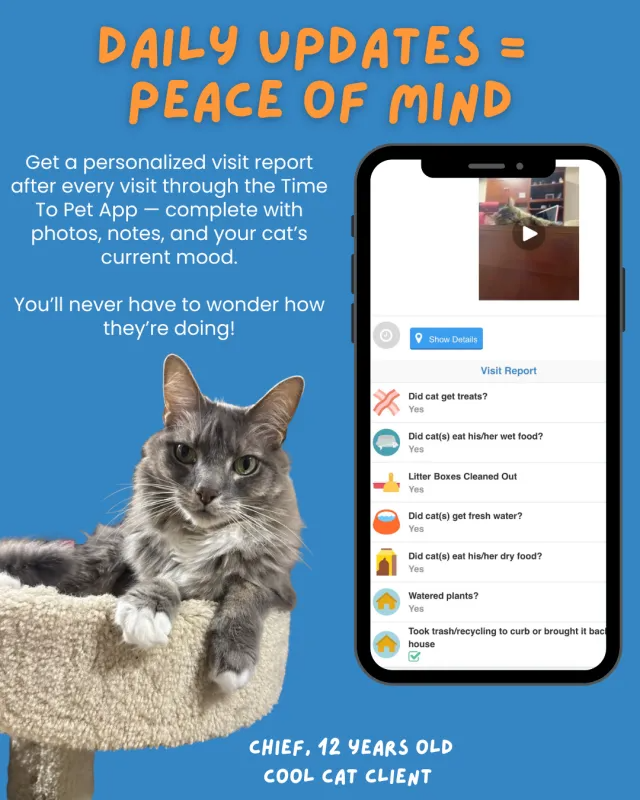
When you are away, worry often grows in the quiet spaces between visits. Daily updates help replace uncertainty with useful information. A good report can confirm that your cat ate, received fresh water, had litter-box care, took medication if needed, and had appropriate playtime, brushing, petting, or snuggle time.
Photos are reassuring, but the written details matter too. A picture of your cat enjoying a sunny spot is lovely. Knowing that they ate normally, used the litter box, and greeted the sitter is even better. If anything looks different, a professional should communicate promptly and follow the instructions you have provided.

For cat families in Apex, Cary, Holly Springs, Morrisville, Fuquay-Varina, and Raleigh, Cool Cats Professional Cat Sitting offers scheduled in-home visits, medication support, and daily photo updates by text, email, or app. That combination of consistent hands-on care and clear communication can make travel feel much less complicated for both cats and their people.
Make Your Return Gentle, Too
When you come home, let your cat set the pace. Some cats run to the door and demand a full report. Others may act distant for a few hours, especially after a longer trip. Keep their feeding, play, and bedtime rhythms steady rather than trying to make up for your absence all at once.
Check the sitter’s notes, restock supplies, and watch for any behavior that continues to seem unusual after you return. Most cats settle quickly when their familiar person and familiar schedule are back together. The thoughtful preparation you made before leaving is what helps make that reunion feel ordinary again – which, for a cat, is often the very best kind of comfort.