

Medication Care Instructions for Your Cat Sitter

A medication schedule can make leaving home feel much harder, especially when your cat is older, managing a chronic condition, or already anxious about routine changes. Clear medication care instructions give your sitter the details needed to care for your furry family member calmly and consistently, without guesswork when you are away.
For most cats, staying at home is the gentler option. Their familiar smells, favorite hiding spots, food bowls, and daily rhythm remain exactly where they expect them to be. But familiar surroundings only help when medication is handled with the same care you would provide yourself. A quick note that says “give pill at night” is rarely enough.
Why Detailed Medication Care Instructions Matter
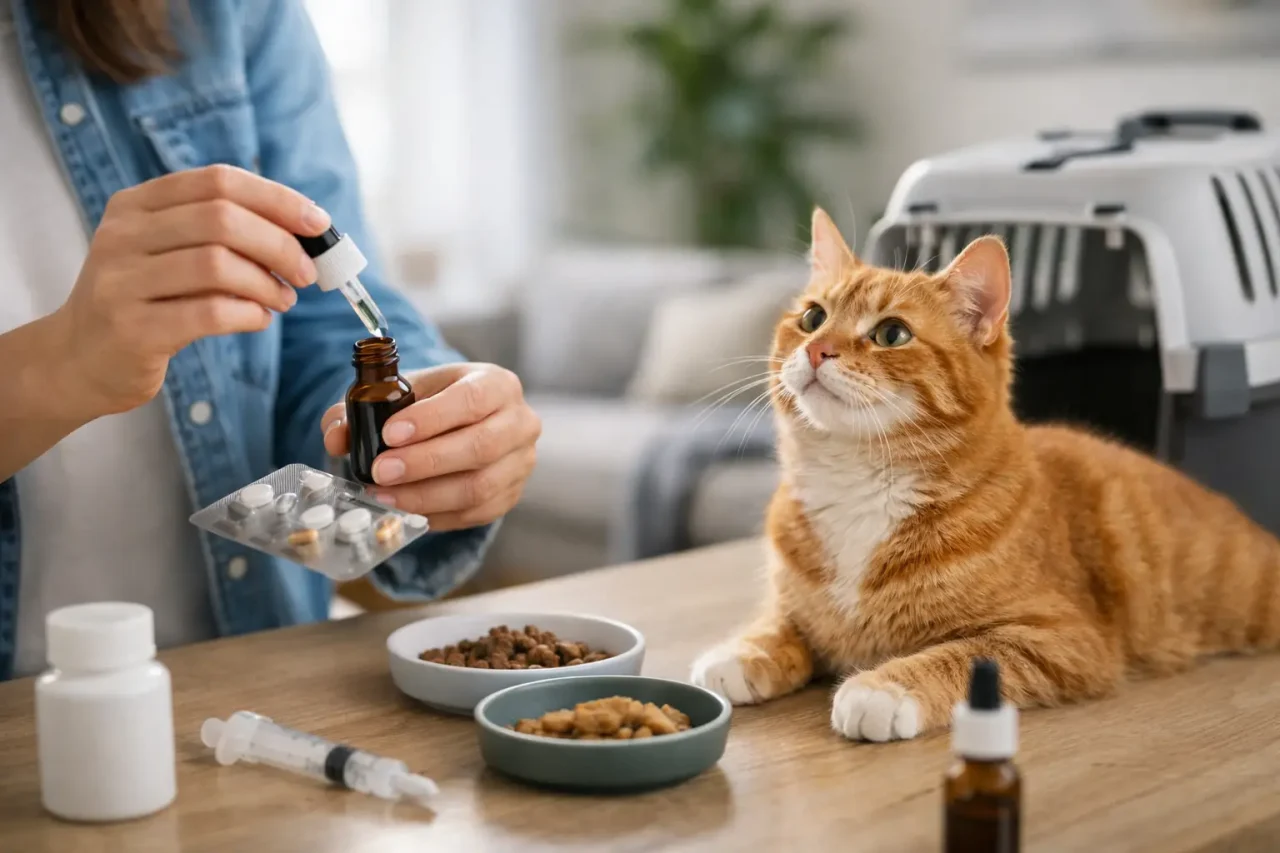
Cats can be wonderfully skilled at detecting a pill hidden in food, spitting out medication after seeming to swallow it, or refusing a treat they happily accepted yesterday. Some medications must be given with food, while others should be separated from meals. A topical treatment may need time to dry before a cat can groom, and insulin requires precise handling, timing, and observation.
The goal is not simply to get medication into your cat. It is to follow the veterinarian’s directions while keeping your cat safe, comfortable, and as relaxed as possible. Detailed instructions also protect against the two problems every cat owner wants to avoid: a missed dose and an accidental double dose.
A professional cat sitter should know what to do if a dose cannot be given, if your cat vomits shortly afterward, or if something about your cat’s behavior seems different. Those decisions should never be left to assumptions.
What to Include in Your Cat’s Medication Plan
Before your trip, prepare one written medication plan for each cat. Even if you discuss the routine during a meet-and-greet, leave a current printed copy in an easy-to-find location. Travel days can be hectic, and written details are far more dependable than memory.
Start with the medication’s full name, strength, and purpose. For example, note whether a tablet is for thyroid support, pain management, an infection, or another condition. Include the exact dose, the time it should be administered, and whether it must be given with food, a treat, or on an empty stomach.
Be very specific about the method that works best for your cat. If your cat accepts a pill pocket only when it is placed inside a small amount of wet food, say so. If a liquid medicine is easier to give slowly from the side of the mouth, explain that. If your cat becomes frightened when approached in a certain room, include the quieter location where they are most cooperative.
For cats with more than one medication, list the order and timing clearly. Do not assume medications can be combined in the same treat or given at the same time. Your veterinarian may have prescribed spacing for a reason.
Your instructions should also identify the veterinarian, clinic phone number, emergency clinic, and your preferred emergency contact. If your cat has a history of side effects, allergic reactions, difficulty swallowing, or hiding when unwell, put that in writing too.
Give Your Sitter the Details That Prevent Mistakes
A complete plan answers the practical questions that arise during a real visit. Consider including these four details alongside each prescription:
- Where the medication is stored, including whether it belongs in the refrigerator or should stay away from heat and sunlight.
- How to tell the dose was successfully given, such as seeing the tablet swallowed or confirming that all medicated food was eaten.
- What to do if your cat refuses the medication, spits it out, vomits, or hides before the scheduled dose.
- Any signs that require immediate contact with you or a veterinarian, such as repeated vomiting, weakness, breathing changes, facial swelling, or a sudden refusal to eat.It also helps to label medication containers with your cat’s name if you have a multi-cat household. When several cats share similar feeding areas, keeping each cat’s supplies separate avoids confusion. A simple folder, basket, or labeled bin can make the visit smoother and reduce the chance of a medication being overlooked.
Never ask a sitter to change a dose, skip a dose, or give an extra dose without veterinary direction. If a pill is dropped, a cat spits it out, or it is unclear whether the medication was swallowed, the safest action is usually to pause and contact you or the veterinary team for guidance. Giving another dose “just in case” can create a more serious problem than one uncertain dose.
Match the Visit Length to Your Cat’s Needs
Medication itself may take only a minute. The full care visit should allow enough time for a sitter to approach your cat patiently, administer the medication properly, watch for immediate concerns, refresh water, serve meals, clean the litter box, and spend reassuring time with your cat.
This matters most for cats who hide, need medication with a full meal, or require monitoring after a dose. A rushed visit can make a cat more fearful and less cooperative the next time. A longer visit may be the better fit when medication needs to be offered slowly, when multiple cats need individual attention, or when a senior cat benefits from extra observation and gentle companionship.
At Cool Cats Professional Cat Sitting, medication support can include pills, injections, and topical treatments as part of thoughtfully planned in-home care. A meet-and-greet is the right time to demonstrate your cat’s routine, discuss what has worked at home, and make sure the visit schedule supports their needs.
Special Notes for Pills, Topicals, and Injections
Every medication type comes with different practical considerations. For pills, do not rely on a full bowl of food to confirm the dose was taken. A cat may eat around a tablet or walk away before finishing. A small, separate portion of food or a veterinarian-approved treat can make confirmation easier, provided that method matches your vet’s instructions.
For liquid medications, include the exact measuring device. Household spoons are not precise enough. If the medication needs to be shaken, refrigerated, or given slowly to prevent coughing, make that clear on the instruction sheet.
Topical medications should include the application location and any precautions around grooming, children, or other pets. If your cat has a favorite spot to rub against furniture after treatment, tell the sitter so they can monitor the area until the product has dried as directed.
Injections require especially clear veterinarian-approved instructions and appropriate handling. Leave supplies together, identify where used needles should go, and provide the clinic’s guidance for missed or questionable doses. Cats receiving insulin may also need notes about eating behavior, water intake, litter box changes, and symptoms that warrant a call right away.
Help Your Cat Stay Comfortable With the Routine
The most successful medication visits are built around your cat’s normal preferences. If your cat enjoys breakfast before a pill, preserve that order. If they respond better to a quiet voice, a favorite blanket, or a few minutes of brushing before medication, that information is useful. These small details are not extras. They can make the difference between a stressful struggle and a calm, predictable moment.
Avoid introducing a brand-new medication method immediately before you leave unless your veterinarian recommends it and you have had time to practice. If possible, show your sitter the routine in person and let them see how your cat typically responds. Be honest about challenges, too. A sitter is better prepared when they know your sweet cat turns into a determined escape artist at pill time.
Daily updates can offer meaningful reassurance while you travel. Ask your sitter to report whether medication was administered, whether your cat ate normally, and whether they noticed anything unusual. A photo is comforting, but a brief note about appetite, litter box habits, energy level, and behavior is often just as valuable for a cat with health needs.
Before you pack your suitcase, take ten quiet minutes to walk through the medication routine from your sitter’s point of view. Clear labels, precise directions, enough supplies, and a plan for questions let your cat keep the familiar care they count on – and let you leave home with a little more purr-fect peace of mind.