

Can Sitters Give Injections? What to Look for in a Trusted Professional

Cheui Rulona • September 25, 2026

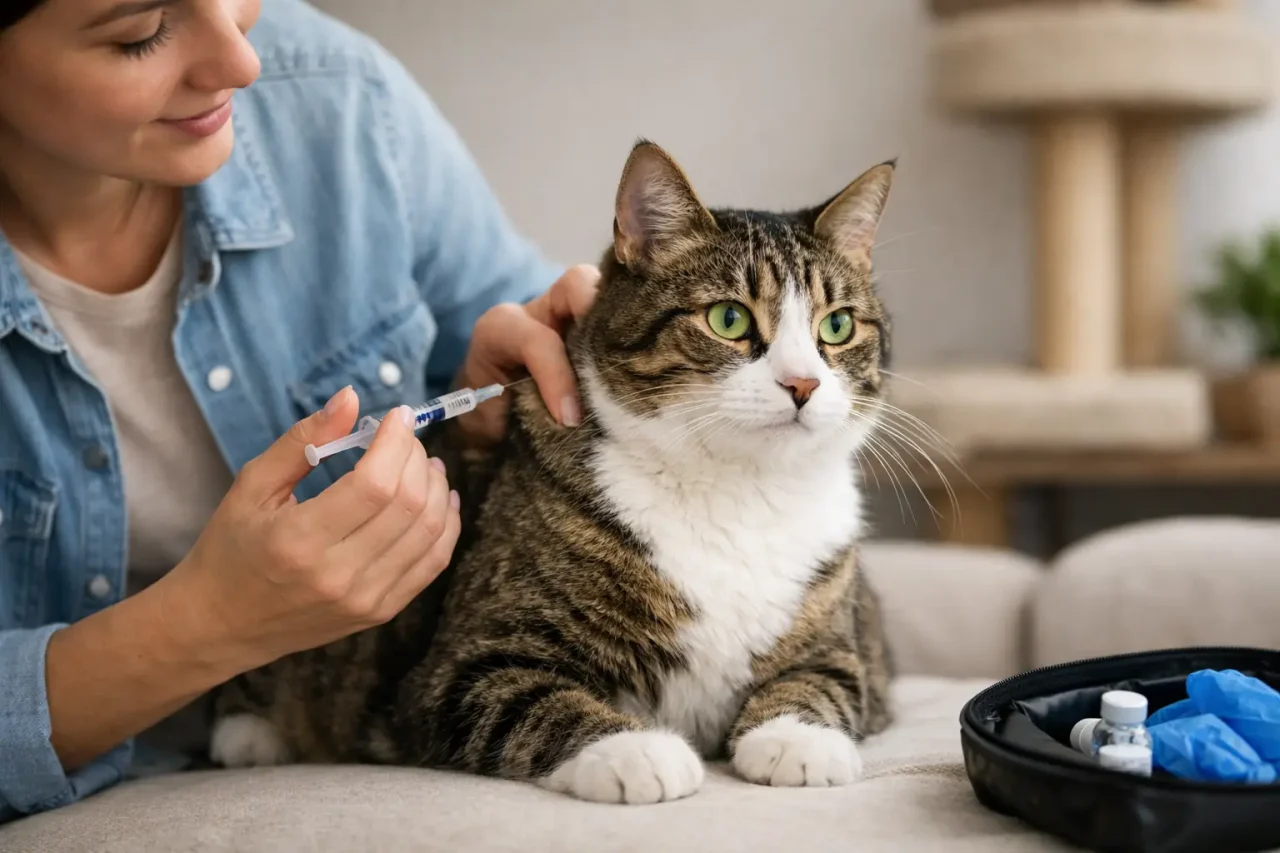
You may be wondering, can sitters give injections without disrupting your cat’s care or putting their health at risk? This blog will guide you through what to look for in a trusted professional. A trip away can feel much less relaxing when your cat needs a daily injection. In many cases, yes – a trained, insured professional cat sitter can administer owner- and veterinarian-prescribed injections during scheduled home visits. The details matter, though. Your cat’s condition, medication schedule, the sitter’s experience, and clear veterinary instructions should all shape the plan.


For cats who need insulin, fluids, or another ongoing injectable medication, staying home with a familiar routine can be far gentler than boarding. The right sitter does more than complete a task. They watch your cat’s behavior, follow your directions closely, and communicate so you are not left guessing how your furry family member is doing.


Can Sitters Give Injections Safely?


Can sitters give injections safely? Here is what to look for in a trusted professional cat sitter. A professional sitter can be able to give injections when the medication has been prescribed by your veterinarian, the dosing instructions are clear, and the sitter has the training and comfort level to perform the task. This is commonly requested for diabetic cats who receive insulin on a reliable schedule.


However, a sitter should never diagnose a condition, change a dose, decide whether to begin a new medication, or replace veterinary care. Medication decisions belong to you and your veterinarian. A sitter’s role is to carry out the established care plan, observe the cat, and promptly contact the designated person if something does not look right.


Rules surrounding pet medication can vary by location and by the nature of the service, so a responsible provider will be transparent about what they can handle. Ask directly whether injections are part of their service, whether there is an added medication fee, and what experience or training supports that service. A vague promise to “figure it out” is not enough when your cat depends on a precise dose.


At Cool Cats Professional Cat Sitting, injection administration is available for an additional charge as part of individualized in-home care. That means the conversation starts before your trip, not after you have packed your bags.


Why Home Visits Can Be Better for Cats Needing Injections


Cats tend to notice every change: a different smell, a carrier appearing in the hallway, a missed meal, or an unfamiliar room. For a cat managing diabetes or another chronic condition, stress can also affect appetite, hiding behavior, and the ease of giving medication.


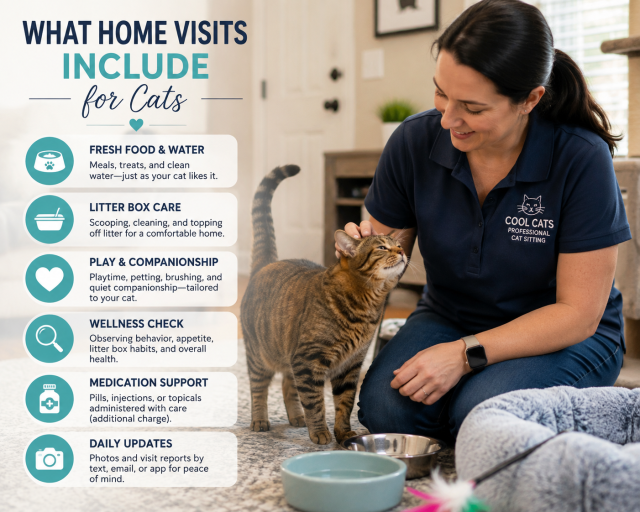
In-home care preserves the pieces of daily life your cat already knows. Their food stays in the same bowl. Their litter box stays in its usual place. Their favorite hiding spot is still available after the injection is complete. A professional cat sitter can arrive at the agreed time, provide the medication according to instructions, then continue with feeding, water refreshes, litter-box care, cleanup, and calm companionship.


That consistency is particularly valuable for cats receiving insulin. Many cats need to eat before their injection, and the sitter needs to know exactly what “normal” eating looks like for that individual cat. A cat who happily finishes breakfast every morning requires a different response than a picky cat who often grazes throughout the day.

what home visits include

Home care is not automatically the best choice for every medical need. A cat whose condition is unstable, who has recently been diagnosed, or who requires frequent monitoring beyond a visit schedule may need veterinary boarding, hospitalization, or another plan recommended by the veterinarian. Choosing the right level of care is an act of love, not a failure of convenience.


What a Sitter Needs Before Giving an Injection


The safest care plan is specific enough that another trusted adult could follow it without making assumptions. During a meet-and-greet, show the sitter where supplies are kept, how your cat responds to handling, and what has worked well at home. If your cat only accepts an injection while eating a favorite wet food, that is useful information. If she gets nervous when someone approaches from her left side, mention it.

Your written instructions should include the medication name, dose, injection time, injection location or rotation guidance if provided, storage requirements, and your veterinarian’s contact information. Include the name and number of a local emergency contact who can make decisions if you are unreachable.


It also helps to explain what to do if your cat refuses food, hides, vomits, or appears unusually lethargic. Your veterinarian should provide medication-specific guidance, especially for insulin. A sitter should not guess whether to administer, delay, or skip a dose when the circumstances fall outside the instructions.


Have enough medication, syringes, treats, food, and cleaning supplies on hand for the full trip, plus extra in case travel plans change. Keep everything together in a clearly labeled area. This small bit of organization protects your cat from preventable confusion during a busy departure day.


A practice session builds confidence


If possible, schedule a practice visit before the first trip. Let the sitter observe your normal routine, then have them administer an injection while you are home if everyone is comfortable. This gives you time to answer questions and lets your cat meet the person who will be caring for them.


A practice session is also the moment to be honest about challenges. Some cats barely notice an injection. Others become wary after a few days, especially if they are not used to being handled by someone new. An experienced cat sitter will use calm, low-pressure handling and will tell you if the plan needs adjustment before you leave.


Questions to Ask an Injection-Capable Cat Sitter


Not every sitter offers injectable medication care, and that is okay. What matters is finding someone who is candid, capable, and prepared. Before booking, ask how often they give injections, what types they are comfortable administering, and whether they have worked with cats whose schedules must stay consistent.


Ask how medication visits are documented. A daily update with a photo is reassuring, but it should also tell you whether your cat ate, whether the injection was administered as directed, and how your cat seemed during the visit. Clear reporting is especially comforting when you are traveling for several days and cannot check the food bowl yourself.


You will also want to understand the backup plan. If the sitter has an emergency, is there another qualified team member? If your cat will not come out or declines a meal, how will the sitter reach you and your veterinarian? Professional insurance, defined procedures, and a reliable client communication system are signs that medication care is being treated with the seriousness it deserves.


For owners in Apex, Cary, Holly Springs, Morrisville, Fuquay-Varina, and Raleigh, local availability matters too. A sitter who regularly serves your area can generally plan visits around the timing your cat needs rather than treating medication as an afterthought.


When a Sitter Should Call You or the Veterinarian


Most routine injections go smoothly, but the sitter should know when observation becomes a concern. A cat who refuses a meal before a medication that normally follows eating, repeatedly vomits, seems weak or disoriented, has trouble breathing, or behaves dramatically differently from normal needs prompt attention. The exact threshold depends on your veterinarian’s instructions and your cat’s medical history.

Your sitter should never be expected to make a medical judgment beyond their role. They can observe carefully, document what happened, contact you, and follow the emergency plan you have authorized. This is why a complete intake conversation matters so much. It turns a frightening unknown into a clear next step.


Give Your Cat a Familiar Face While You Are Away


Medication care is not just about the injection itself. It is about the quiet minutes before and after: a soft voice, a clean litter box, fresh water, a familiar meal, and someone noticing whether your cat is acting like themselves. With the right sitter, careful instructions, and veterinary guidance, your cat can receive dependable care without leaving the comfort of home.


Before your next trip, take time to arrange a meet-and-greet and talk through your cat’s exact routine. That preparation can give you the purr-fect peace of mind to step out the door knowing your cat’s care is personal, consistent, and in capable hands.

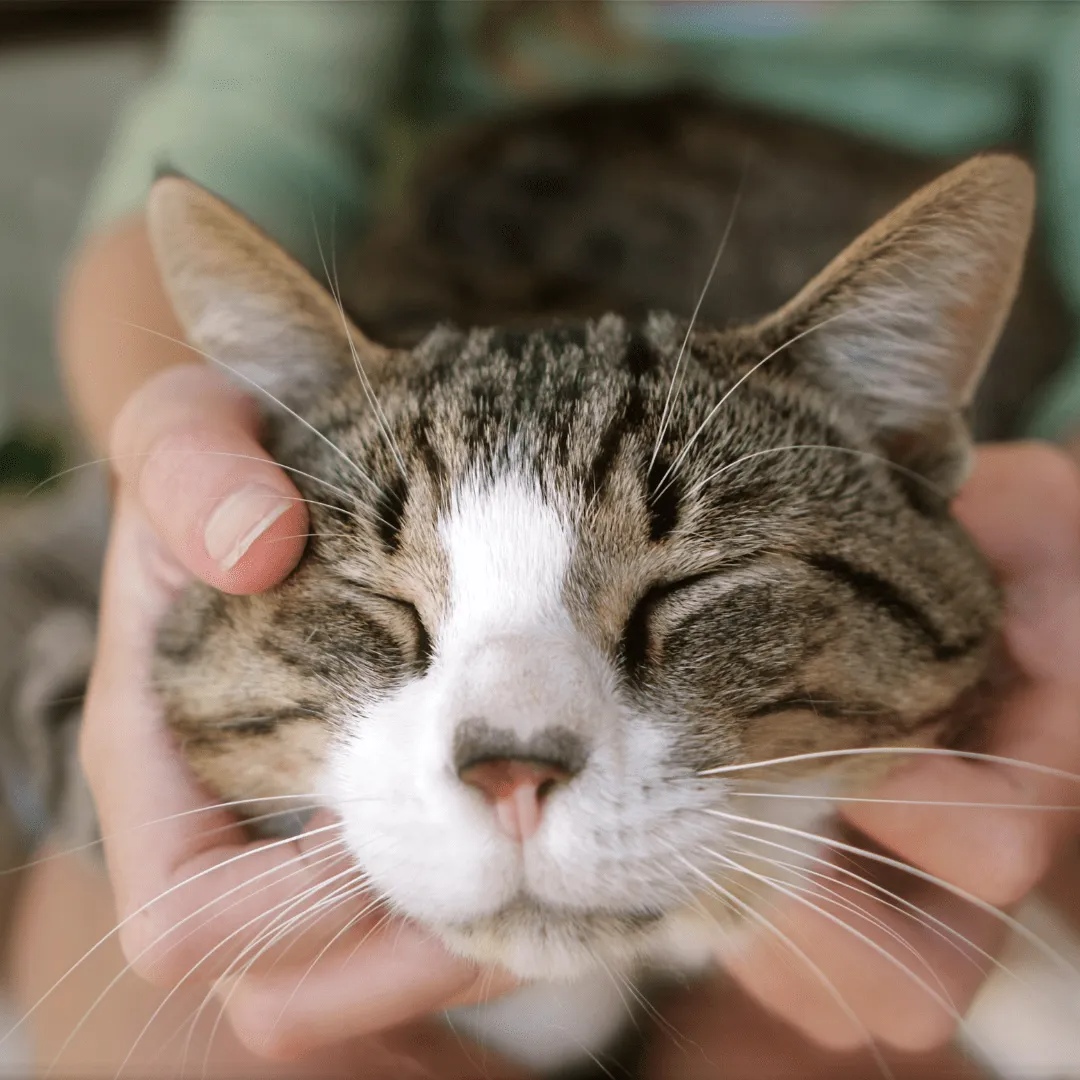
Tabby cat with closed eyes being gently held by hands, close-up portrait
September 29, 2026
Talking About How To Make Cats Happy And The Month-Long Holiday That Promotes Cat Happiness The month of September is celebrated by cat lovers everywhere as Happy Cat Month! Never heard of Happy Cat Month? Then you’re in luck because Cool Cats Professional Cat Sitting has you covered! This article will cover everything you need to know about Happy Cats Month, how to celebrate it, and some of the best ways to keep your cat happy. What Is Happy Cat Month? So what is Happy Cat Month? Happy Cat Month is a month-long holiday that aims to inform and educate cat owners about how to make their cats healthy and happy. It’s a common misconception that cats are self-sufficient pets. While most cats do have an independent nature, they are still very social creatures. Cats need lots of love & attention just like any other pet. Happy Cat Month is a friendly and celebratory way to educate people about the welfare, health, and importance of our feline friends.
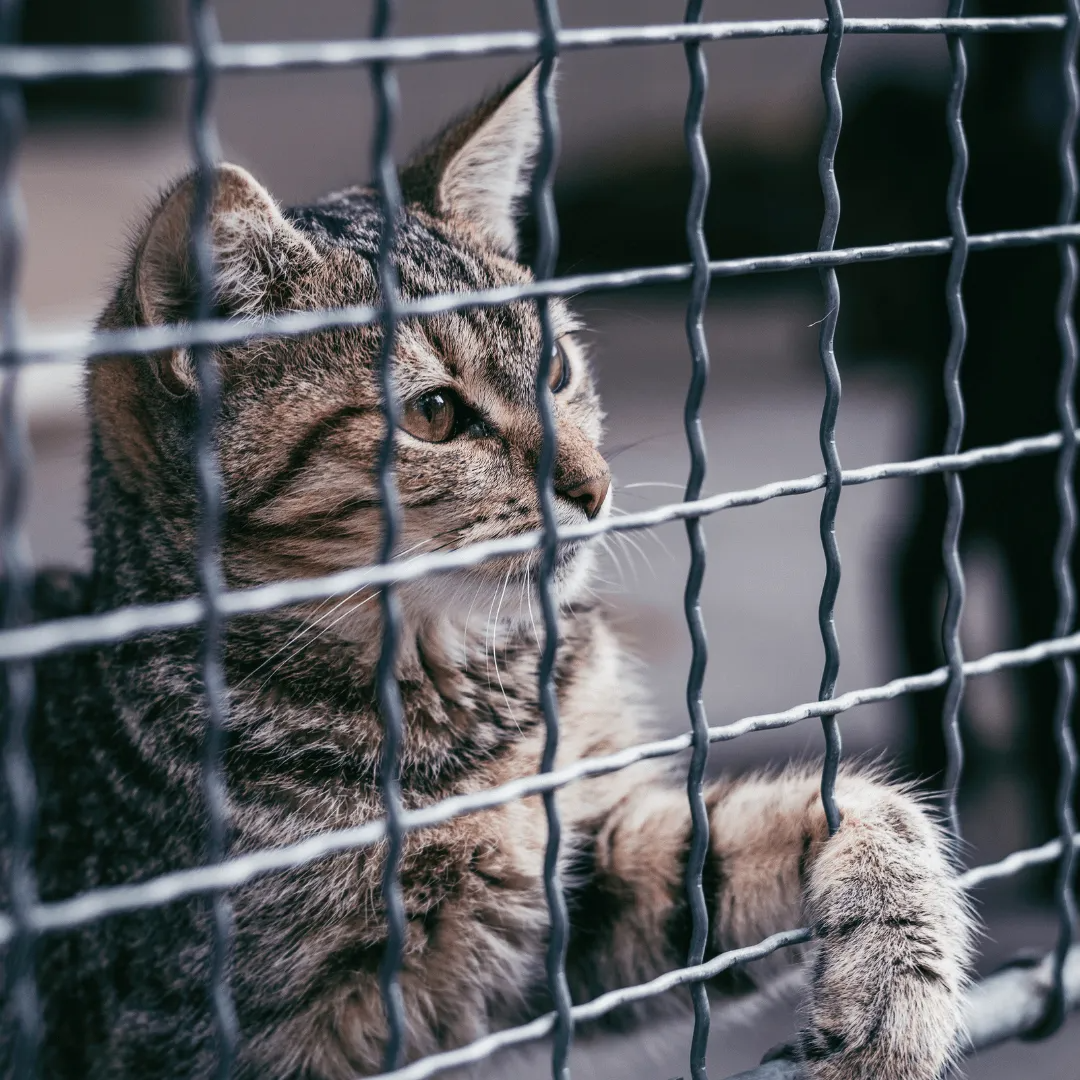
A wildcat behind a wire fence, looking through the bars with one paw raised.
September 29, 2026
Covering Two Very Important Pet-Themed Holidays That Focus On Shelter Animals And The Struggles They Face The month of September contains several pet-themed awareness based holidays. Two of the most significant of these holidays are Adopt A Less Adoptable Pet Week and Remember Me Thursday. Both of these holidays are centered around shelter animals and the struggles they face. This article will discuss both of these holidays and offer various ways you can observe them. Adopt A Less Adoptable Pet Week The 3rd week of September is widely celebrated by pet lovers everywhere as Adopt A Less Adoptable Pet Week. This year (2023) Adopt A Less Adoptable Pet Week takes place from September 18th to September 24th. This week-long holiday was founded by PetFinder , an online searchable database of animals that need homes. Additionally, PetFinder also has a directory of nearly 11,000 animal shelters and adoption organizations. These animal shelters and adoption organizations span across the U.S., Canada, and Mexico. Adopt A Less Adoptable Pet Week was founded to raise public awareness about shelter animals that are often overlooked. Most of these animals are overlooked based solely on appearance. However, just because an animal doesn’t look perfect, doesn’t mean they are not worthy of adoption. Additionally, this also applies to senior pets or pets with special needs. Many people believe it would require too much effort to care for a senior pet or special needs pet. Caring for these types of pets may not be easy, but it is still very rewarding and humbling to do so. Remember Me Thursday Remember Me Thursday occurs every year on the last Thursday of September. This year (2023) it will take place on September 28th. This pet themed awareness based holiday was founded in 2013 by Helen Woodward Animal Center of San Diego . The focus of Remember Me Thursday is to raise awareness about the importance of pet adoption and all of the shelter animals that are in need of a forever home. Remember Me Thursday has made a huge impact in the world since its founding in 2013. More than 190 countries have supported Remember Me Thursday along with over 700 different animal welfare organizations worldwide. Additionally, more than 330 million people have helped spread awareness about Remember Me Thursday across various social media platforms. What started as a pet-themed holiday has now become a worldwide movement to inspire change in shelter animals’ lives.