

Pet Sitter Versus Neighbor: What is the difference?

Cheui Rulona • September 25, 2026

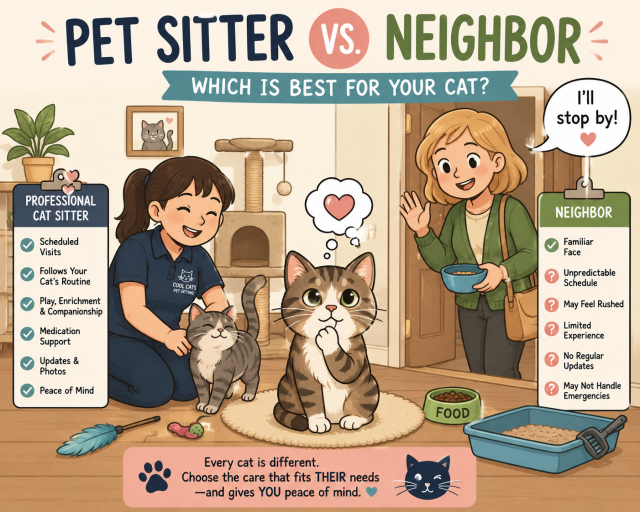
Pet Sitter Versus Neighbor? Your cat may know your neighbor, but familiarity is not always the same as dependable care. When weighing a pet sitter versus neighbor, the real question is not who loves cats. It is who can consistently follow your cat’s routine, notice small changes, and be there when your furry family member needs more than a quick food refill.


For a short overnight trip, a trusted neighbor may be a perfectly reasonable choice. For longer travel, multiple cats, a senior cat, or a cat with medication needs, professional in-home care can bring a different level of structure and reassurance. The right answer depends on your cat, your trip, and the person providing the care.


Pet Sitter Versus Neighbor: What Changes for Your Cat?


Cats are often described as independent, but that does not mean they are low-maintenance. Many cats hide discomfort well. A bowl that seems untouched, an extra hairball, a change in litter-box output, or a cat who will not come out for a treat can be an early signal that something is off..

A neighbor may stop by with the best intentions, but pet care is usually a favor added around work, family commitments, traffic, and unexpected schedule changes. That can lead to rushed visits, missed details, or uncertainty about whether a visit happened exactly when planned. None of this makes a neighbor uncaring. It simply reflects the difference between doing someone a kindness and providing a scheduled service.


A professional cat sitter is there specifically to care for your cat. Visits are planned for a set length, with clear instructions for food, fresh water, litter boxes, play, brushing, affection, and cleanup. That predictable rhythm matters to cats, especially when their favorite person is away.

cat sitter vs neighbor.

A routine is more than a feeding schedule


Cats’ routines are important. Some cats want breakfast at 7:00 a.m. and will let the whole household know it. Others need several small meals, a particular water fountain refreshed, or a scoop of a specific food mixed with a supplement. A professional sitter works from your instructions rather than guessing what is probably fine.


That attention can be especially valuable in multi-cat homes. It is not enough to put out extra food if one cat tends to guard the bowl, another eats too quickly, and a third needs a separate meal behind a closed door. Individual routines help ensure every cat is seen, fed, and cared for as intended.


When a Neighbor Can Be a Good Choice


There is no need to hire professional care for every absence. If you will be gone for one night, your cat is healthy and easygoing, and your neighbor is genuinely reliable, a neighbor visit may be all your cat needs. This arrangement can work well when the neighbor already understands your cat’s personality, has access to your home, and is comfortable with the basics of feeding and litter maintenance.

The key is being honest about the arrangement. Is your neighbor available at the same time each day? Do they know what to do if your cat refuses food, vomits, hides, or slips outside? Are they comfortable contacting you and, if necessary, taking action quickly? A clear written care sheet can make a friendly favor much safer for everyone.


It is also wise to consider the pressure involved. A neighbor who agrees reluctantly or is already overwhelmed may feel guilty saying no. A professional sitter gives both you and your neighbor clearer boundaries: pet care is being handled by someone whose time is reserved for it.


Why Professional Cat Care Offers More Reassurance


When you are several states away, attending a work conference, or trying to relax on vacation, uncertainty can quickly become stressful. Did the cat eat? Was the litter box normal? Did anyone actually see her today? Professional care is designed to answer those questions.


At Cool Cats Professional Cat Sitting, visits are built around the cat’s established home routine. Depending on the needs of the household, owners can choose 30-, 45-, or 60-minute visits. That time is used for more than placing food in a dish. It allows for litter-box maintenance, water refreshes, accident or hairball cleanup, play, brushing, petting, and calm companionship on your cat’s terms.


Daily photo updates are another meaningful difference. A picture of your cat enjoying a treat, chasing a wand toy, or curled up in a favorite spot can ease the familiar worry of leaving them behind. Updates also create accountability. You are not left wondering whether someone stopped in or how your cat seemed that day.


Professional sitters also bring a cat-focused eye. They learn what normal looks like for the cats in their care: appetite, energy level, hiding habits, social behavior, and litter-box patterns. While no one can prevent every health issue, noticing a change promptly gives an owner a better chance to make an informed decision.


Medication changes the decision


Medication is often where the pet sitter versus neighbor decision becomes clearer. Giving a pill is not always as simple as hiding it in a treat. Some cats spit medication out, need careful handling, or require doses at consistent intervals. Injections and topical medications bring their own instructions and responsibilities.


If your cat has ongoing health needs, ask who will administer medication, how they will confirm it was received, and what happens if your cat resists. A trained, experienced professional can provide a more practical option than asking a neighbor to take on a task that makes them uneasy. Cool Cats offers support for pills, injections, and topical medications for an additional charge, allowing care plans to reflect real medical needs rather than wishful thinking.


Compare the Details Before You Decide


Price naturally matters, and a neighbor may cost little or nothing beyond a thoughtful thank-you. Yet the lowest-cost choice is not always the least stressful one. Consider what you are receiving: reserved appointment time, cat-specific experience, insurance, routine documentation, communication, and a care plan designed around your household.


Before choosing either option, think through these practical questions:


  • How long will you be away, and how often does your cat need a person present?
  • Does your cat have medical needs, a sensitive stomach, mobility concerns, or a history of hiding when stressed?
  • Can the caregiver commit to a consistent schedule rather than dropping in whenever convenient?
  • Will you receive an update that tells you how your cat is actually doing?
  • Is there a plan if the caregiver is delayed, your cat seems unwell, or access to your home becomes an issue?


These questions are not meant to make travel feel complicated. They help replace assumptions with a plan. A reliable neighbor may have excellent answers to every one of them. If they do not, professional care can fill the gap.


The Best Choice Depends on Your Cat and Your Trip


A confident young cat who sleeps through most of the day has different needs from a diabetic senior or a shy rescue who only trusts familiar routines. A two-day trip is different from a ten-day family vacation. The care decision should reflect those details, not a one-size-fits-all rule.

For cat owners in Apex, Cary, Holly Springs, Morrisville, Fuquay-Varina, and Raleigh, in-home professional care can be particularly helpful when travel days run long or plans change. Your cat stays in the familiar sights, smells, and sleeping spots of home, while someone dependable checks on the essentials and gives them the attention they deserve.


Before your next trip, take a few minutes to picture your cat’s ordinary day: the breakfast ritual, the favorite hiding spot, the preferred toy, the evening cuddle, and the small signs that tell you they feel well. Choose the caregiver who can protect that ordinary comfort while you are away. That is the kind of care that gives both you and your cat a little more purr-fect peace of mind.

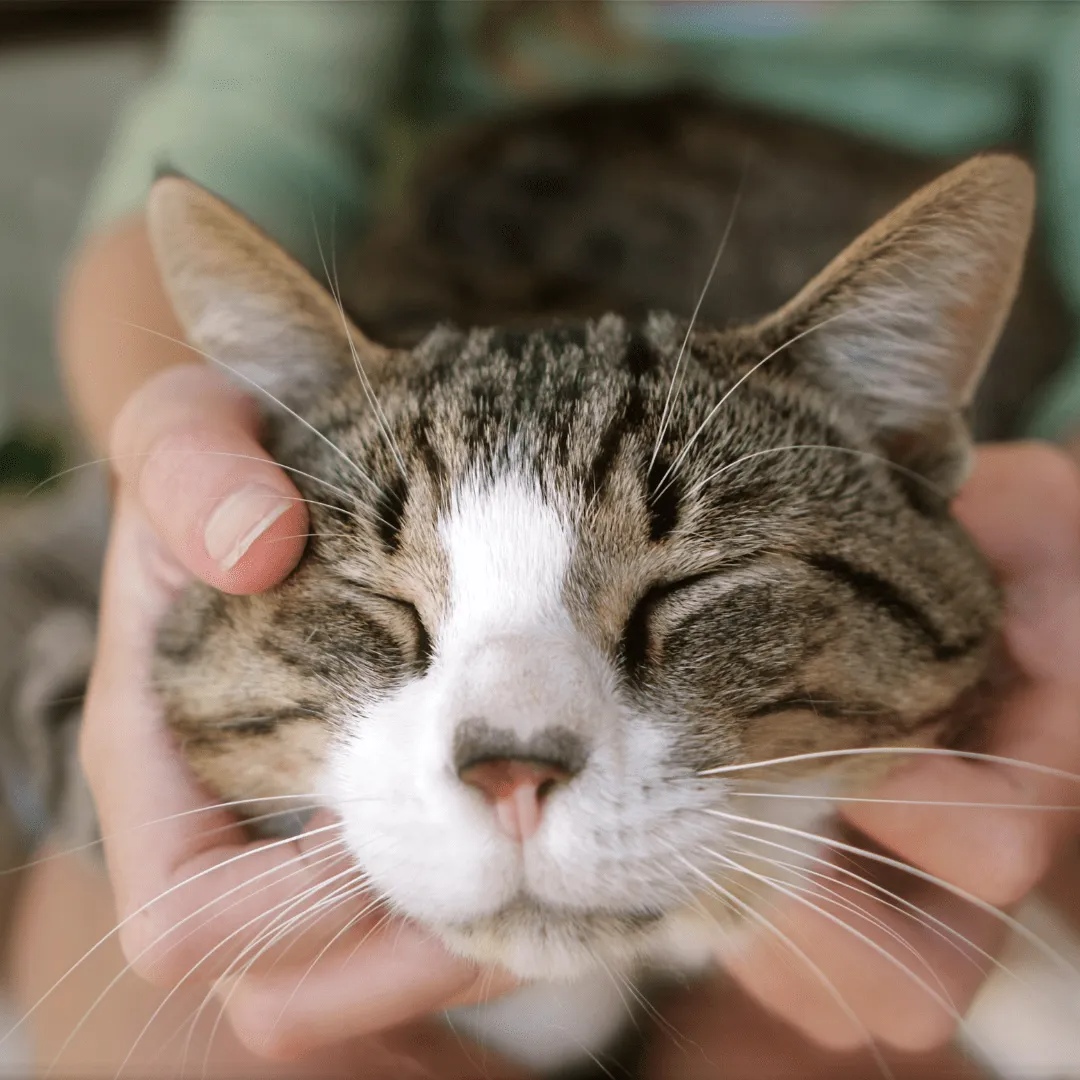
Tabby cat with closed eyes being gently held by hands, close-up portrait
September 29, 2026
Talking About How To Make Cats Happy And The Month-Long Holiday That Promotes Cat Happiness The month of September is celebrated by cat lovers everywhere as Happy Cat Month! Never heard of Happy Cat Month? Then you’re in luck because Cool Cats Professional Cat Sitting has you covered! This article will cover everything you need to know about Happy Cats Month, how to celebrate it, and some of the best ways to keep your cat happy. What Is Happy Cat Month? So what is Happy Cat Month? Happy Cat Month is a month-long holiday that aims to inform and educate cat owners about how to make their cats healthy and happy. It’s a common misconception that cats are self-sufficient pets. While most cats do have an independent nature, they are still very social creatures. Cats need lots of love & attention just like any other pet. Happy Cat Month is a friendly and celebratory way to educate people about the welfare, health, and importance of our feline friends.
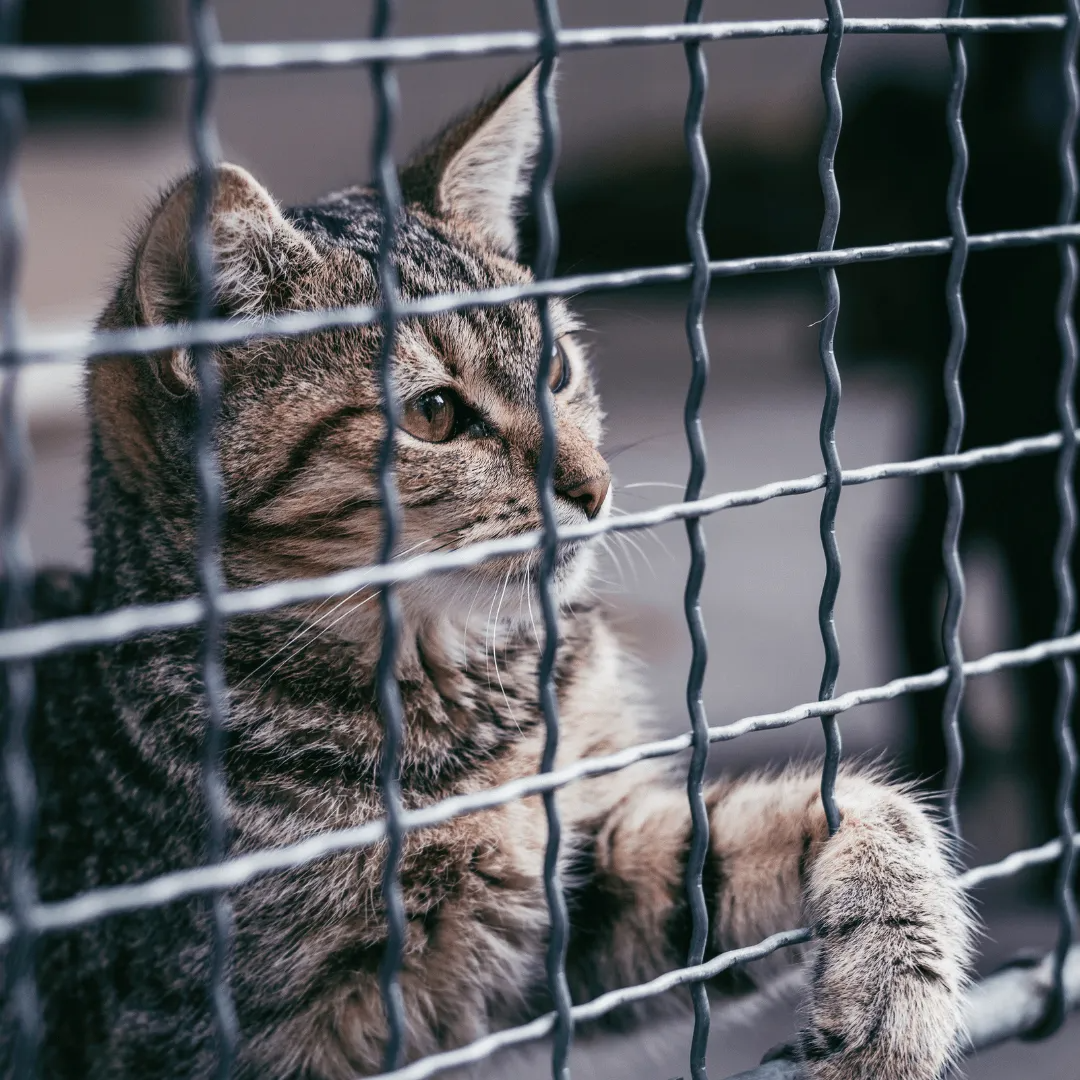
A wildcat behind a wire fence, looking through the bars with one paw raised.
September 29, 2026
Covering Two Very Important Pet-Themed Holidays That Focus On Shelter Animals And The Struggles They Face The month of September contains several pet-themed awareness based holidays. Two of the most significant of these holidays are Adopt A Less Adoptable Pet Week and Remember Me Thursday. Both of these holidays are centered around shelter animals and the struggles they face. This article will discuss both of these holidays and offer various ways you can observe them. Adopt A Less Adoptable Pet Week The 3rd week of September is widely celebrated by pet lovers everywhere as Adopt A Less Adoptable Pet Week. This year (2023) Adopt A Less Adoptable Pet Week takes place from September 18th to September 24th. This week-long holiday was founded by PetFinder , an online searchable database of animals that need homes. Additionally, PetFinder also has a directory of nearly 11,000 animal shelters and adoption organizations. These animal shelters and adoption organizations span across the U.S., Canada, and Mexico. Adopt A Less Adoptable Pet Week was founded to raise public awareness about shelter animals that are often overlooked. Most of these animals are overlooked based solely on appearance. However, just because an animal doesn’t look perfect, doesn’t mean they are not worthy of adoption. Additionally, this also applies to senior pets or pets with special needs. Many people believe it would require too much effort to care for a senior pet or special needs pet. Caring for these types of pets may not be easy, but it is still very rewarding and humbling to do so. Remember Me Thursday Remember Me Thursday occurs every year on the last Thursday of September. This year (2023) it will take place on September 28th. This pet themed awareness based holiday was founded in 2013 by Helen Woodward Animal Center of San Diego . The focus of Remember Me Thursday is to raise awareness about the importance of pet adoption and all of the shelter animals that are in need of a forever home. Remember Me Thursday has made a huge impact in the world since its founding in 2013. More than 190 countries have supported Remember Me Thursday along with over 700 different animal welfare organizations worldwide. Additionally, more than 330 million people have helped spread awareness about Remember Me Thursday across various social media platforms. What started as a pet-themed holiday has now become a worldwide movement to inspire change in shelter animals’ lives.