

What Home Visits Include for Your Cat at Home

Cheui Rulona • September 25, 2026

A cat may look independent, but leaving them home alone for several days can bring up plenty of worries. Will they eat normally? Is the litter box clean? Are they hiding because they miss you, or because something is wrong? Knowing what home visits include helps replace that uncertainty with a clear, comforting care plan.


For most cats, staying in their own familiar home is far less stressful than traveling to a boarding facility. Their favorite sleeping spot, familiar scents, daily schedule, and territory all stay the same. A professional cat sitter steps into that routine with attentive, cat-specific care while you are away.


What Home Visits Include for Cats


Every cat is different, which is why a quality home visit should follow your instructions rather than force a one-size-fits-all routine. Some cats greet a sitter at the door and demand playtime. Others need a calm, quiet presence and a little patience before they are ready for attention.

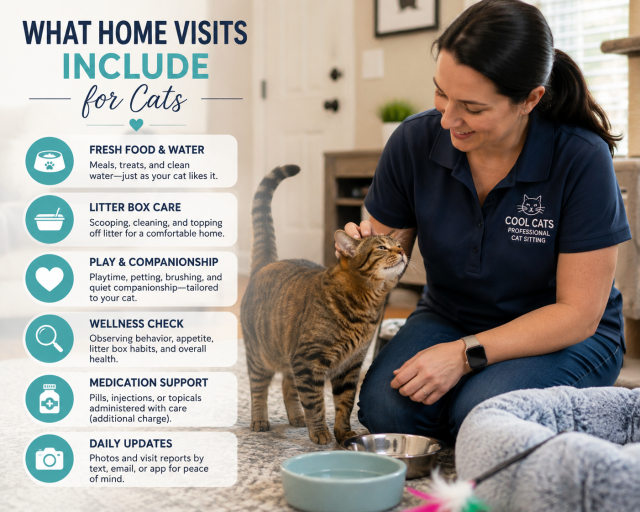
At its core, each visit includes the practical essentials your cat needs to stay healthy, comfortable, and settled at home: fresh food and water, litter-box care, a wellness check, and personalized interaction. The details matter. A sitter should know whether your cat eats wet food at a specific time, prefers a certain water bowl, needs a slow approach, or has a favorite wand toy that gets them moving.

what home visits include

Feeding and fresh water


Feeding is more than filling a dish. During a home visit, your sitter follows the feeding instructions you provide, including portions, meal timing, treats, and any special dietary needs. This is especially valuable for cats on prescription food, weight-management plans, or routines that should not be changed while you are away.


Water is refreshed and bowls are checked for cleanliness. If your cat uses a fountain, the sitter can follow your instructions for refilling and monitoring it. Small details like these support normal habits and can encourage a cat to keep eating and drinking as usual.


Litter-box maintenance and household cleanup


A clean litter box can make a big difference in a cat’s comfort and behavior. Home visits include scooping litter boxes, removing waste, and adding litter as instructed. For multi-cat homes, this care is particularly important because boxes can become soiled quickly.

Professional sitters also look out for accidents, hairballs, or other messes that may need cleaning. This is not just about keeping the house tidy. Changes in litter-box output, vomit, appetite, or behavior can sometimes be early signs that a cat is not feeling well. A careful sitter notices those changes and keeps you informed.


Play, affection, and quiet companionship


Cats need more than food and a clean box. Many benefit from active play, brushing, petting, or simply having someone sit nearby and speak softly to them. The right kind of attention depends on the cat.


An energetic young cat may enjoy chasing a teaser toy, batting at a ball, or working for treats in a puzzle toy. A senior cat may prefer gentle brushing, a cozy lap, or a few calm minutes of companionship. Shy cats may not want hands-on interaction right away, but a cat-savvy sitter can offer reassurance without pushing past their comfort level.


This individualized time is one reason a quick drop-in from a neighbor is not always enough. A professional cat sitter is there to observe, engage, and adjust based on what your cat is communicating that day.


A Home Visit Also Includes a Wellness Check


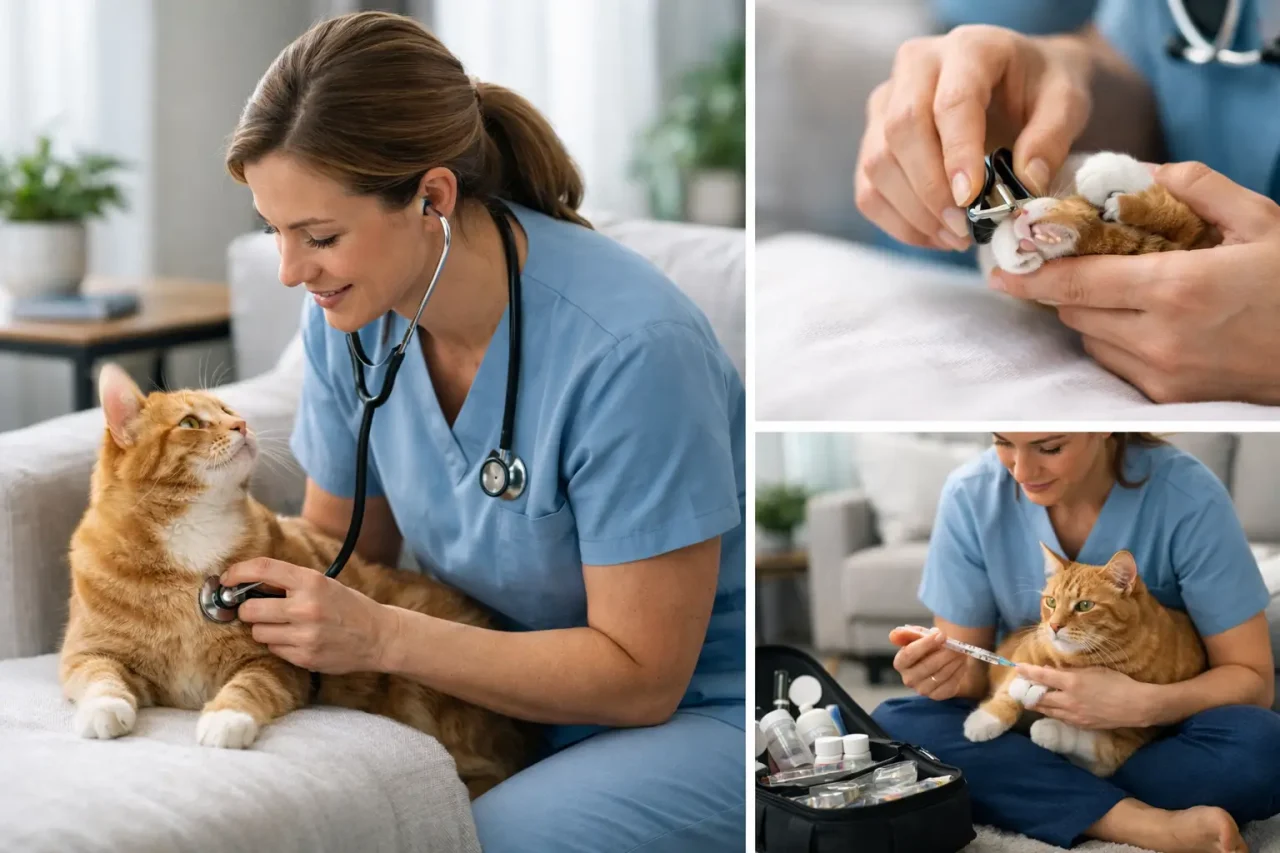
A sitter is not a veterinarian, but an experienced cat professional pays close attention to the everyday signs that tell you how a cat is doing. Each visit should include a visual check of your cat’s appearance, energy level, appetite, water intake, litter-box habits, and general behavior.

For example, a social cat who suddenly will not come out from under the bed may simply be missing their people. But if that same cat also leaves food untouched or seems lethargic, it deserves prompt communication with the owner. Likewise, a cat who is eating, using the litter box normally, and relaxing in their usual place is giving reassuring signs that their routine is intact.


Daily updates add another layer of confidence. Cool Cats Professional Cat Sitting can send photos and visit reports by text, email, or app, so you can see your furry family member and know the essentials were completed. That photo of your cat stretched out in their favorite sunny spot can make a business trip or family vacation feel much easier.


Medication Care When Your Cat Needs More Support


For cats with ongoing health needs, medication support can be the deciding factor in choosing a professional sitter. Pills, topical medications, and injections require care, consistency, and a calm approach. Medication administration is available for an additional charge, allowing owners to arrange care that fits their cat’s specific needs.


It is helpful to be realistic here: some cats accept medication easily, while others need extra time and practiced handling. Share your cat’s exact routine during the meet-and-greet, including the best way to give medication, where supplies are stored, and what has worked well in the past. If your cat has a complex medical condition or recently changing symptoms, speak with your veterinarian before travel to confirm the right care plan.


Choosing the Right Visit Length


Not every household needs the same amount of time. A visit that works well for one quiet adult cat may not be enough for a playful kitten, a senior cat needing medication, or a busy multi-cat family.


Cool Cats offers scheduled 30-, 45-, and 60-minute visits, with pricing beginning at $28 per visit. A 30-minute visit can be a good fit for cats with straightforward routines who need feeding, litter care, and a meaningful check-in. A 45-minute visit gives more room for play, brushing, multiple feeding tasks, or a cat who takes time to warm up.


A 60-minute visit is often a thoughtful choice for multiple cats, cats who need medication, high-energy cats, or homes where each cat has a different routine. Longer visits are not automatically necessary, but they can provide welcome breathing room. Your sitter can complete care tasks without rushing and still give your cat the attention they deserve.


What to Share Before the First Visit


A meet-and-greet is where your care instructions become a real plan. Walk your sitter through feeding supplies, litter areas, cleaning tools, favorite toys, hiding places, medications, and any quirks that make your cat uniquely themselves.


Be open about behavior, too. Let the sitter know if your cat startles at loud noises, guards food, dislikes being picked up, hides from new people, or becomes chatty at 5 a.m. None of these details are silly. They help the sitter provide thoughtful care from the first visit instead of spending time guessing.


It is also wise to leave your veterinarian’s contact information, an emergency contact, and clear authorization for emergency decisions. Professional, insured care means being prepared for the unlikely moments as well as the ordinary ones.


Why In-Home Cat Care Feels Different


Boarding can be necessary in a few situations, particularly when a veterinarian recommends close medical observation. But for many healthy cats, in-home visits offer a gentler alternative. Your cat stays in a familiar environment, avoids exposure to unfamiliar animals, and keeps their normal sights, sounds, and scents.


For owners in Apex, Cary, Holly Springs, Morrisville, Fuquay-Varina, and Raleigh, professional home visits offer both practical care and purr-fect peace of mind. You do not have to wonder whether the food bowl was filled or whether your cat received any real attention. You have a plan, a trusted sitter, and updates that keep you connected.


Before your next trip, consider what helps your cat feel most like themselves. The best care plan is not simply about checking tasks off a list. It is about preserving the small routines that tell your cat they are safe, cared for, and waiting comfortably for you to come home.

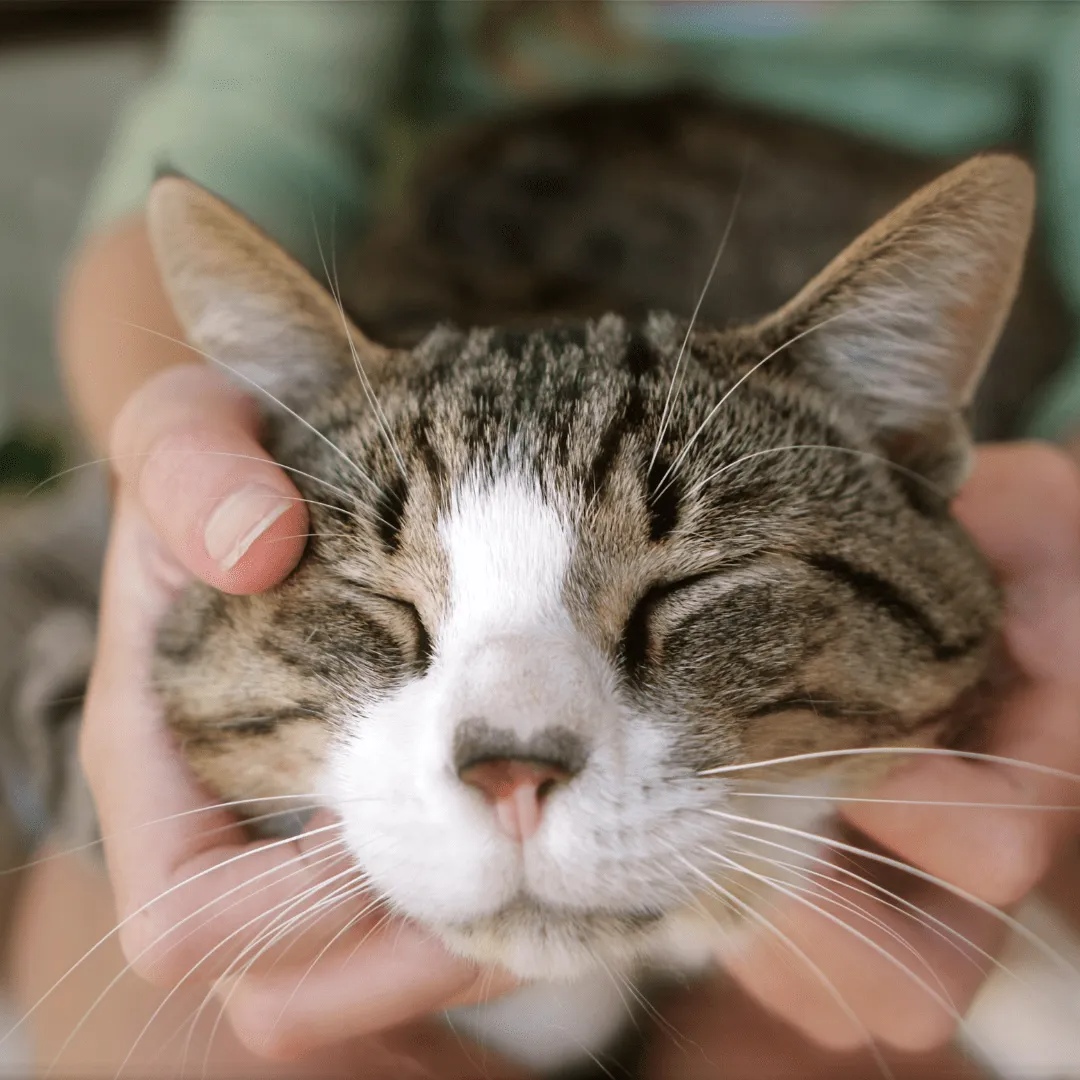
Tabby cat with closed eyes being gently held by hands, close-up portrait
September 29, 2026
Talking About How To Make Cats Happy And The Month-Long Holiday That Promotes Cat Happiness The month of September is celebrated by cat lovers everywhere as Happy Cat Month! Never heard of Happy Cat Month? Then you’re in luck because Cool Cats Professional Cat Sitting has you covered! This article will cover everything you need to know about Happy Cats Month, how to celebrate it, and some of the best ways to keep your cat happy. What Is Happy Cat Month? So what is Happy Cat Month? Happy Cat Month is a month-long holiday that aims to inform and educate cat owners about how to make their cats healthy and happy. It’s a common misconception that cats are self-sufficient pets. While most cats do have an independent nature, they are still very social creatures. Cats need lots of love & attention just like any other pet. Happy Cat Month is a friendly and celebratory way to educate people about the welfare, health, and importance of our feline friends.
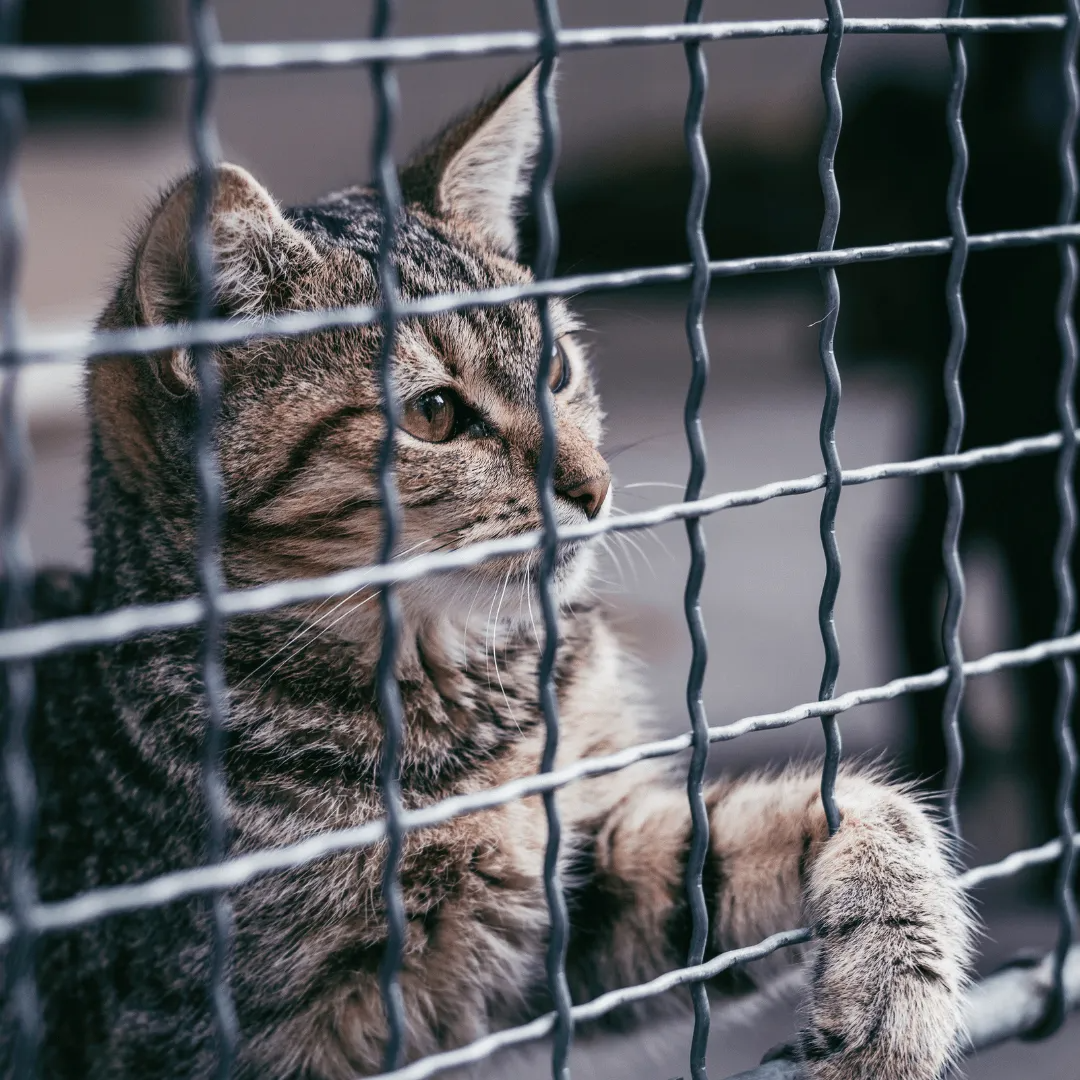
A wildcat behind a wire fence, looking through the bars with one paw raised.
September 29, 2026
Covering Two Very Important Pet-Themed Holidays That Focus On Shelter Animals And The Struggles They Face The month of September contains several pet-themed awareness based holidays. Two of the most significant of these holidays are Adopt A Less Adoptable Pet Week and Remember Me Thursday. Both of these holidays are centered around shelter animals and the struggles they face. This article will discuss both of these holidays and offer various ways you can observe them. Adopt A Less Adoptable Pet Week The 3rd week of September is widely celebrated by pet lovers everywhere as Adopt A Less Adoptable Pet Week. This year (2023) Adopt A Less Adoptable Pet Week takes place from September 18th to September 24th. This week-long holiday was founded by PetFinder , an online searchable database of animals that need homes. Additionally, PetFinder also has a directory of nearly 11,000 animal shelters and adoption organizations. These animal shelters and adoption organizations span across the U.S., Canada, and Mexico. Adopt A Less Adoptable Pet Week was founded to raise public awareness about shelter animals that are often overlooked. Most of these animals are overlooked based solely on appearance. However, just because an animal doesn’t look perfect, doesn’t mean they are not worthy of adoption. Additionally, this also applies to senior pets or pets with special needs. Many people believe it would require too much effort to care for a senior pet or special needs pet. Caring for these types of pets may not be easy, but it is still very rewarding and humbling to do so. Remember Me Thursday Remember Me Thursday occurs every year on the last Thursday of September. This year (2023) it will take place on September 28th. This pet themed awareness based holiday was founded in 2013 by Helen Woodward Animal Center of San Diego . The focus of Remember Me Thursday is to raise awareness about the importance of pet adoption and all of the shelter animals that are in need of a forever home. Remember Me Thursday has made a huge impact in the world since its founding in 2013. More than 190 countries have supported Remember Me Thursday along with over 700 different animal welfare organizations worldwide. Additionally, more than 330 million people have helped spread awareness about Remember Me Thursday across various social media platforms. What started as a pet-themed holiday has now become a worldwide movement to inspire change in shelter animals’ lives.