

Why Hire An Insured Professional Cat Sitter?

Cheui Rulona • September 25, 2026

If you are going away for a trip this guide will explain why an insured professional cat sitter is worth hiring. The thing about cats is that they love their routine and if anything upsets it they become stressed out. So, leaving your cat at home can be the best choice, but it can still bring a lot of worry. Who should you hire to take care of your cat? Will a friend or neighbor notice whether she is eating normally? Will they notice if she has skipped the litter box? Is a quick neighbor check enough for a senior cat or a cat who needs medication? An insured professional cat sitter is worth hiring to be there to replace uncertainty with thoughtful, accountable care in the place your cat knows best.


For many cats, home is more than a location. It is where the food bowl sits in the right corner, where the sunny afternoon nap happens, and where familiar scents make the day feel safe. Professional in-home visits protect that sense of normalcy while giving you clear evidence that your furry family member is cared for.


Why insurance matters when choosing cat care


Insurance is not the most cuddly part of cat sitting, but it is one of the clearest signs that a business takes its responsibility seriously. A professional sitter enters your home, handles your pet’s daily care, and may be trusted with a key or access code. Proper insurance helps protect both the client and the business should an unexpected accident occur during service.


It also separates a professional service from a casual favor. A well-meaning friend may adore cats, but they may not have a care plan, business coverage, experience spotting subtle health changes, or the consistency to visit at the promised time every day. When you hire a professional, you are choosing a provider whose work is built around showing up, following instructions, documenting care, and communicating clearly.

Insurance alone is not a promise that nothing will ever go wrong. Cats can be wonderfully unpredictable, and every home has its own quirks. What it does show is that the sitter has put real structure behind their service rather than treating your cat’s care as an informal side job.


What an insured professional cat sitter should do


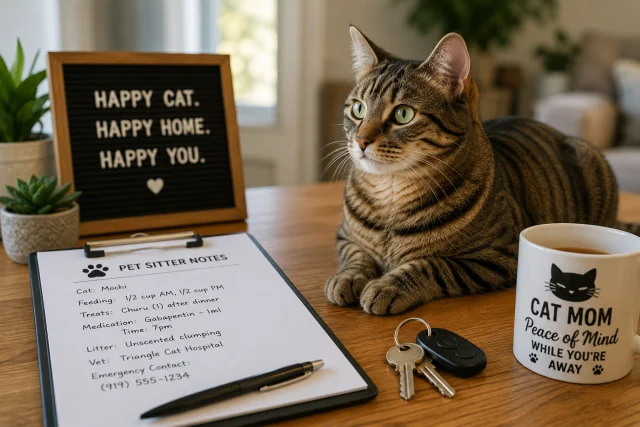
The best cat sitting is quietly thorough. Your sitter should spend time learning your cat’s usual routine before you leave, including feeding amounts, preferred treats, litter habits, hiding places, play preferences, medical needs, and veterinarian information. A meet-and-greet is especially useful for shy cats, multi-cat households, and cats with special care requirements.


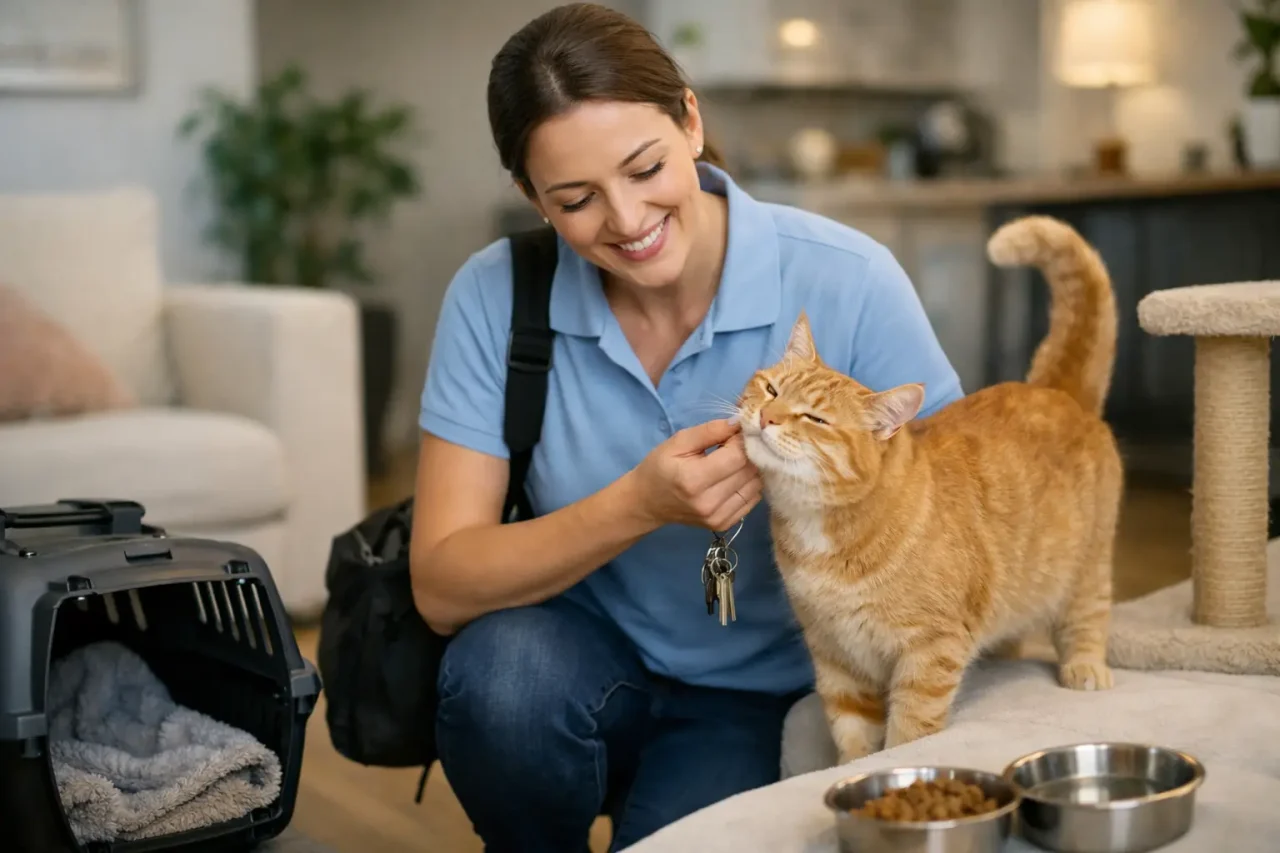
During each visit, care should go beyond filling a bowl and heading out the door. At Cool Cats Professional Cat Sitting, visits are designed around each cat’s instructions and can include fresh food and water, litter-box maintenance, cleanup of accidents or hairballs, play, brushing, petting, and gentle snuggle time when your cat welcomes it.


That last detail matters. Some cats will greet a sitter at the door. Others may spend the first day under the bed and emerge later when the house is quiet. A cat-focused sitter does not force affection or assume every cat wants the same interaction. They observe body language, move at the cat’s pace, and make each visit feel predictable.


Visit length matters, too. A quick 30-minute visit can be a good fit for an independent adult cat with straightforward needs. A 45- or 60-minute visit may better support playful cats, social cats, multi-cat families, kittens, or a cat who needs extra time to eat, settle, or receive medication. The right choice depends on your cat, not just the number of days you will be away.


Cat-specific experience can catch small changes


Cats are masters of acting normal when they are not feeling their best. A change in appetite, water intake, litter-box output, behavior, posture, or grooming can be easy to miss during a rushed drop-in. Someone who works with cats regularly is more likely to notice when a familiar pattern has changed.


That does not mean a sitter replaces veterinary care. If something seems concerning, a professional should contact you promptly and follow the emergency plan you have discussed. The value is in having an attentive person on site who knows your normal instructions, sees your cat consistently, and can recognize when a problem may need a closer look.


Medication care is another place where experience matters. Pills, topical treatments, and injections require clear directions, patient handling, and honest communication. If your cat needs ongoing medication, ask exactly what services are available, whether there is an additional fee, and how the sitter will update you if a dose cannot be administered as expected. Clear answers are far more reassuring than vague promises.


Daily updates make being away easier


The hardest part of travel is often not knowing how your cat is doing between visits. A daily update turns that silence into useful reassurance. You should expect to hear whether your cat ate, used the litter box normally, took medication if applicable, and how they behaved during the visit.

Photos are not just a sweet extra, although a picture of a relaxed cat in their favorite spot can make any trip feel lighter. They provide a small window into your cat’s day and help you see that care is happening as planned. Updates by text, email, or app also give you a simple place to respond if you have a question.


For cats who hide from new people, an honest update is just as valuable. A good sitter will not pretend a shy cat became a lap cat overnight. Instead, they may report that food was eaten, the litter box was used, and your cat was seen safely resting in a usual hiding spot. That is thoughtful care, not a disappointing visit.

Hiring an insured sitter matters

Questions to ask before you book


A short conversation before booking can tell you a great deal about whether a sitter is the right match. Ask if the business is insured, how visits are timed, what happens if your regular sitter has an emergency, and how updates are delivered. You can also ask how they handle veterinary emergencies, key or access-code security, medication, and cats who are fearful or reactive.


It is worth discussing the practical details that are easy to overlook:


  • How much food, litter, and medication should be left out, plus where backup supplies are stored.
  • Which veterinarian and emergency clinic should be contacted, and what spending authorization you are comfortable providing.
  • Whether anyone else may enter the home while you are away, such as a cleaner, family member, or contractor.
  • What changes would prompt an immediate call, rather than a note in the daily update.


You should also share the little things that make your cat feel at ease. Maybe your cat only eats from a shallow dish. Maybe she loves wand-toy play but dislikes brushing. Maybe he hides when the doorbell rings but comes out for a Churu treat. These details help a sitter care for the individual cat in front of them, not a generic idea of a cat.


In-home visits versus boarding


Boarding can be appropriate in certain situations, particularly when a cat needs intensive medical monitoring that cannot be provided through scheduled home visits. For most healthy cats, though, boarding asks them to adjust to unfamiliar smells, sounds, people, and nearby animals while their family is away. That can be a lot for a creature who values territory and routine.


In-home care keeps the environment steady. Your cat stays with familiar bedding, familiar litter, and familiar routes through the house. You avoid the carrier trip, the exposure to other animals, and the stress of a new setting. A professional sitter still brings structure and observation, but your cat gets to remain comfortably at home.

For Triangle-area cat families in Apex, Cary, Holly Springs, Morrisville, Fuquay-Varina, and Raleigh, a local cat-only service also means care is planned around the realities of your home and schedule. You can choose visit lengths that fit your cat’s needs rather than trying to fit your cat into a one-size-fits-all arrangement.


Before your next work trip or vacation, take a few minutes to write down your cat’s normal day. The more clearly you can describe what normal looks like, the more confidently a caring professional can protect it while you are away. That purr-fect peace of mind starts with choosing someone prepared to treat your cat like family.

Tabby cat with closed eyes being gently held by hands, close-up portrait
September 29, 2026
Talking About How To Make Cats Happy And The Month-Long Holiday That Promotes Cat Happiness The month of September is celebrated by cat lovers everywhere as Happy Cat Month! Never heard of Happy Cat Month? Then you’re in luck because Cool Cats Professional Cat Sitting has you covered! This article will cover everything you need to know about Happy Cats Month, how to celebrate it, and some of the best ways to keep your cat happy. What Is Happy Cat Month? So what is Happy Cat Month? Happy Cat Month is a month-long holiday that aims to inform and educate cat owners about how to make their cats healthy and happy. It’s a common misconception that cats are self-sufficient pets. While most cats do have an independent nature, they are still very social creatures. Cats need lots of love & attention just like any other pet. Happy Cat Month is a friendly and celebratory way to educate people about the welfare, health, and importance of our feline friends.
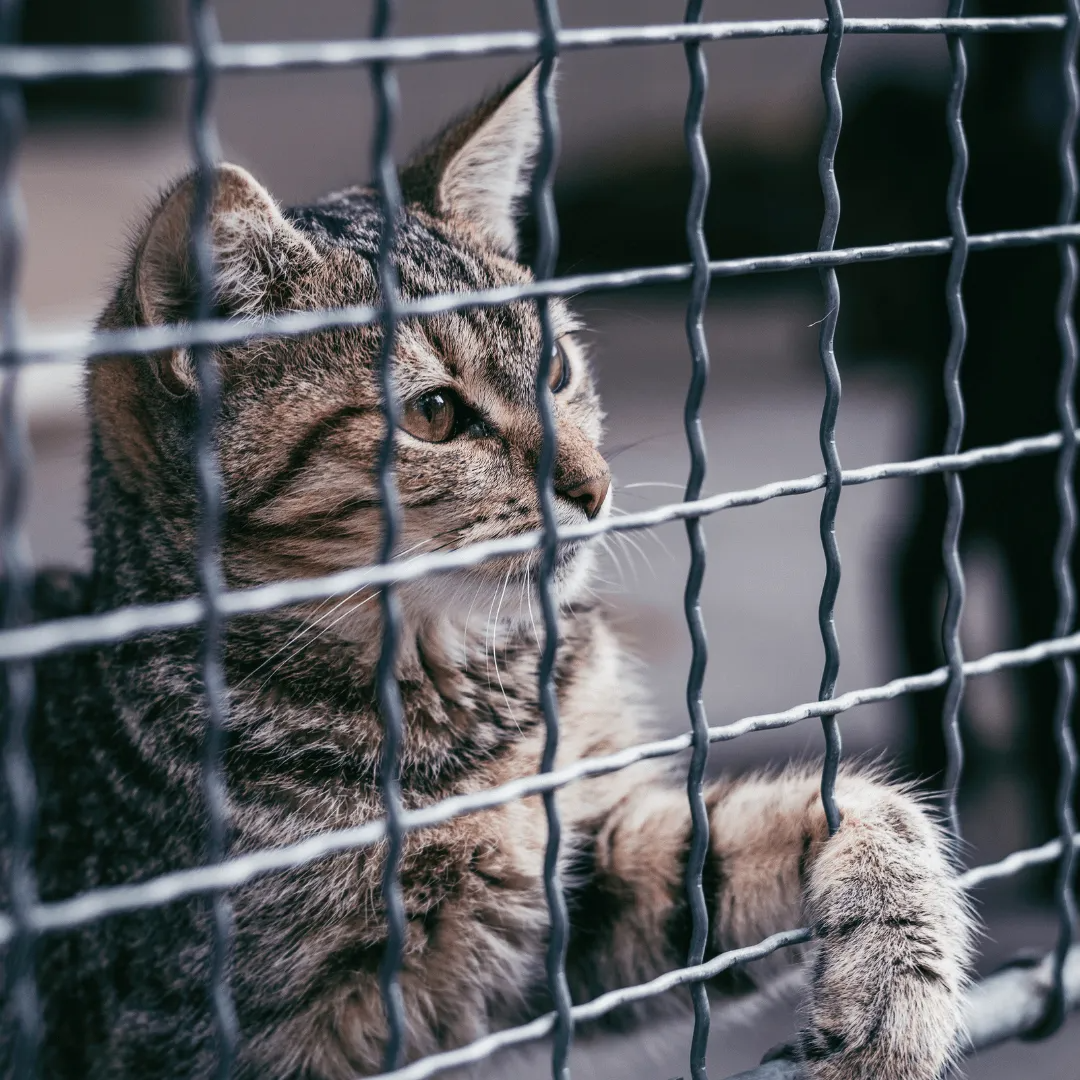
A wildcat behind a wire fence, looking through the bars with one paw raised.
September 29, 2026
Covering Two Very Important Pet-Themed Holidays That Focus On Shelter Animals And The Struggles They Face The month of September contains several pet-themed awareness based holidays. Two of the most significant of these holidays are Adopt A Less Adoptable Pet Week and Remember Me Thursday. Both of these holidays are centered around shelter animals and the struggles they face. This article will discuss both of these holidays and offer various ways you can observe them. Adopt A Less Adoptable Pet Week The 3rd week of September is widely celebrated by pet lovers everywhere as Adopt A Less Adoptable Pet Week. This year (2023) Adopt A Less Adoptable Pet Week takes place from September 18th to September 24th. This week-long holiday was founded by PetFinder , an online searchable database of animals that need homes. Additionally, PetFinder also has a directory of nearly 11,000 animal shelters and adoption organizations. These animal shelters and adoption organizations span across the U.S., Canada, and Mexico. Adopt A Less Adoptable Pet Week was founded to raise public awareness about shelter animals that are often overlooked. Most of these animals are overlooked based solely on appearance. However, just because an animal doesn’t look perfect, doesn’t mean they are not worthy of adoption. Additionally, this also applies to senior pets or pets with special needs. Many people believe it would require too much effort to care for a senior pet or special needs pet. Caring for these types of pets may not be easy, but it is still very rewarding and humbling to do so. Remember Me Thursday Remember Me Thursday occurs every year on the last Thursday of September. This year (2023) it will take place on September 28th. This pet themed awareness based holiday was founded in 2013 by Helen Woodward Animal Center of San Diego . The focus of Remember Me Thursday is to raise awareness about the importance of pet adoption and all of the shelter animals that are in need of a forever home. Remember Me Thursday has made a huge impact in the world since its founding in 2013. More than 190 countries have supported Remember Me Thursday along with over 700 different animal welfare organizations worldwide. Additionally, more than 330 million people have helped spread awareness about Remember Me Thursday across various social media platforms. What started as a pet-themed holiday has now become a worldwide movement to inspire change in shelter animals’ lives.